

Powered By Blogger

sábado, 1 de noviembre de 2025

Obituario

PARTIDO COMUNISTA DE URUGUAY

Cristina, celebramos tus semillas

Camarada María Cristina Torterolo Pérez, 23 de enero de 1954 – 26 de octubre de 2025


A riesgo de molestar a Hegel, ¿habría acaso algo más bello en el mundo que la sonrisa de una mujer comunista enamorada, de pensamiento enamorado por las causas justas de la clase obrera e inmersa objetivamente, además, en un caso particular de la dialéctica como lo es la dialéctica de la sociedad burguesa?

Las semillas del comunismo que el Partido siembra y que militantes revolucionarios como Cristina esparcen orgánicamente, a partir de lo causal y lo necesario, se vuelven árbol de flores fértiles —para Lenin, siendo que es algo que se observa en la historia, así lo conjetura al menos en uno de sus artículos[i] en la revista Bolchevik, es vital el hecho político de saber afrontar la pálida concepción del desarrollo de la lucha de los contrarios como mera «repetición», a partir del necesario dominio tanto del sentido de la unidad condicional o relativa de los contrarios, como de su lucha absoluta, en que se excluyen mutuamente y se relacionan—.

A la camarada Cristina, tanto se le daba el mote de «Cris», como el de «Tina», o el de «Negrita» (dependiendo de los grados de intimidad que se alcanzasen, siendo que el de más alto grado sería, y que más atesoraba, el de «Mi muñequita de trapo»).

El árbol del comunismo posee terreno firme (un suelo forjado de la acreción de los productos del trabajo y sus mundos), un suelo dado de oposiciones concretas, para arraigar sus raíces gnoseológicas y crecer como árbol vivo, poderoso, del conocimiento humano.

En la biblioteca de Cristina se hallan las obras completas de Lenin, leídas y estudiadas de tiempo en tiempo (una sala abierta además a los camaradas; un hogar de puertas abiertas en su localidad del Cerro montevideano, en la cooperativa de viviendas por ayuda mutua de trabajadoras domésticas que fundara y que orientara resueltamente en sus relaciones institucionales a una concepción clasista de la definición de los problemas).

Antes de eso, a poco de iniciada su militancia en el cooperativismo de la FUCVAM, al ser desalojada de una vivienda de techos de láminas de calamina que arrendara por Villa Sayago, debió desplazarse al albergue nocturno Pablo VI en la localidad del Cordón (una obra social católica, en la que personas profundamente cristianas le brindaron dónde guarecerse a mujeres y a varones en situación de calle; al no ser mixtos los alojamientos, y por esa causa, debería separarse momentáneamente de su esposo y compañero de vida). No era igualmente su primer desalojo. En aquel entonces las fuerzas progresistas aún no habían alcanzado el gobierno ni se había generado una cartera de desarrollo social, como tampoco se había aún alcanzado la oportunidad de un relevamiento territorial a partir de otra cartera como la de vivienda (algunas de esas cuestiones deberían esperar, para nacer a futuro con una primera administración Vázquez).

En sus discusiones ideológicas, la definición de un problema político se manifiesta como síntesis leninista; tanto en su labor dirigente durante tres décadas en la secretaría de organización del sindicato de los trabajadores de la enseñanza privada (SINTEP), a partir de la Lista 1985 Por el camino de Julio Castro, y, siendo fundadora, a la vez, del núcleo de la Escuela y Liceo Elbio Fernández de la Sociedad de Amigos de la Educación Popular —donde trabajaría dedicándose al seguimiento administrativo de la secretaría pedagógica de esa institución— como también en el acto militante de extensas jornadas que dedicara al Partido y a su agrupación de la enseñanza. Supo de la complejidad teórica de las relaciones políticas, como en el caso en que siendo dirigente cooperativa y parte contratante en la construcción de viviendas por ayuda mutua hubo que resolver un conflicto laboral dado con los trabajadores sindicados en el SUNCA, a los que se empleaba; de ambos lados de la mesa en la cartera de trabajo y seguridad social, del lado empleador, como del lado contratado, había trabajadores comunistas en disputa. Y supo que toda desviación ideológica que se produjera en esas negociaciones sería alimento para el enemigo de clase, así como para el estamento de burócratas oportunistas. 

Proviene de un hogar de siete hermanos (cinco mujeres y dos varones).

Vivían en un alojamiento típico de la Aguada, no lejano al Palacio Legislativo, de gran patio abierto al que afluían las habitaciones, así como el servicio de baños sin retrete y cocina y la escalerilla al desván —algo de aquella arquitectura ha perdurado por la calle Nueva Palmira—. Luego de recorrer un extenso pasillo, a la manera de una crujía a cielo abierto y de paramentos desnudos, se llegaba a la entrada (unas puertas de doble hoja desvencijadas y de sucesivas pátinas de pintura cascada).

Su madre, de una tez de invariable raíz negra, pecosa y de cabellos pelirrojos, se dedicaría al trabajo doméstico en casas pudientes.

Su padre, de fenotipo de piel pálido y de ojos celestes, trabajaría en el puerto dedicándose a cuestiones de mecánica.

Cristina heredaría el carácter y los gestos de su madre. Eso se volvería cada vez más notorio con el paso del tiempo.

Criaban al trastazo. Era una vida dura —sigue siéndolo—.

En ese hogar de tantos hermanos se cumplía la denuncia política de Lenin al mito capitalista y a la degeneración que provoca de las relaciones humanas: No produzco pan para que tú lo comas, sino para que tú lo compres. Y si no había dinero para comprar hogazas de pan, no había pan. Al paso del tiempo, la propia madre de Cristina renunciaría al pachequismo de los colorados y se pasaría a votar a la 1001; de anciana, aquella obrera doméstica, ahora comunista, aprendería por primera vez en la vida a leer; y leería la prensa partidaria y alcanzaba a rasguños, de manera incipiente, al fin, el mundo de las categorías materialistas (ese maná bolchevique).

La camarada Cristina se opuso a los renovadores del XXII Congreso y a su estratagema de voto secreto (a la reducción improponible de la democracia interna partidaria a mera oclocracia). Así como se opuso al revisionismo explicitado —no siendo otra cosa que un revisionismo filosófico típico de abjuración del marxismo— en el interés tendencialmente reaccionario que hubo de terminar con los conceptos leninistas de dictadura del proletariado o del partido como vanguardia.

Rechazó que se tergiversara la necesaria discusión política del mundo socialista, el trastocamiento en su objeto de análisis. Rechazó que se desplazara el trabajo teórico a una pasarela pública de dimes y diretes y hasta de amarillismo de las diferencias internas de interpretación del hecho político, donde parecerían primar las veleidades y los personalismos antes que la tesis arismendiana de conducirse a la necesaria interrelación dialéctica entre la etapa de liberación nacional y la socialista.

Aquellos olvidados renovadores no se habrían percatado de que la contrarrevolución existe como efecto del fenómeno revolucionario (el conocimiento no es una línea recta, otra vez, es Lenin quien insiste en esto, sino una espiral de innumerables matices en el modo de abordar la realidad del problema). No atenderían que también surgió en el período de la reacción stolypiniana, durante la cruda represión zarista, entre un sector de intelectuales del partido Obrero Socialdemócrata Ruso, un alejamiento del marxismo tras de la derrota de la revolución de Lenin en el arco histórico de 1905 a 1907, aunque de aquel proceso político harían síntesis última los bolcheviques en detrimento de los mencheviques. ¿En qué triste socavón de la historia han quedado aquellos renovadores del Partido? En un precoz parafraseo de Lenin, respecto de lo prologal a sus notas críticas a una filosofía reaccionaria, podría mencionarse que pierden de pronto toda audacia y todo respeto por sus propias convicciones cuando tienen que precisar nítidamente su actitud hacia Marx y Engels.

A su vez, ante la insistencia en posteriores delirios de intento de liquidación del marxismo-leninismo a partir de la generación de una estructura nueva como partido del socialismo democrático, la camarada Cristina se integró a toda una pléyade de comunistas que por vía estatutaria (de recolección del diez por ciento de firmas ológrafas de afiliados) exigió la formalización de un Congreso Extraordinario. Lo que lograran aquellos militantes heroicos, verdaderos gigantes de la política marxista, habidos en un comunismo al borde mismo de no poseer Partido, sin duda, deberá tratarse como un hito en la contribución a la orientación teórica materialista del proceso revolucionario nacional (aunque este escopo ha sido reducido por la politología universitaria a relato seudoetnográfico, sin validez historiológica, e incluso anclado en la estupidez supina, en algunos casos, en cuanto a las conclusiones formuladas de ese producto político). Al decir del científico comunista Massera en el XXIII Congreso, ante una dirección que traicionaba y abjuraba del marxismo-leninismo, hubo una rebelión de la base. A la vez que afrontó las asperezas partidarias (asunto que también refractaría en el alcance de una política de alianzas con el mundo frenteamplista y progresista), la camarada Cristina también sabía necesario que debían afianzarse fraternalmente las relaciones políticas en el mundo sindical y sus movimientos sociales de convergencia.  

En lo particular de su lucha orientada a la organización de la clase trabajadora, afrontó a su vez y en carne propia el problema de la persecución política o del cretinismo faccioso (a instancias de la generación de su núcleo síndico en el Elbio Fernández hubo movimientos reaccionarios de la patronal acosándola para que desistiese de la defensa del derecho laboral, o en su cooperativa de vivienda donde grupúsculos anclados en el anticomunismo o el comunitarismo pretenderían amedrentarla porque fundamentaba la existencia de irregularidades como el multar a un socio por no asistir a un acto de movilización de la FUCVAM, siendo que no-asistir es un derecho de decisión, o la falta de control efectivo en el capital de horas trabajadas, y no encontrarían mejor respuesta que demandarla por haber plantado casuarinas en su jardín, incluso propusieron expulsarla mediante tecnicismos estatutarios aunque un tribunal de apelaciones falló contra el sinsentido jurídico de ese dislate).

En el marco del SINTEP y de su lista 1985, de la CSEU y del PIT CNT, así como de su militancia cooperativa, nunca negociaría a partir de cargos; se trabajó una y otra vez el acuerdo político en condiciones programáticas. En el obrar de su representación política se interpelaba a la hora de tomar decisiones; sus relaciones interpersonales y orgánicas, además, las asumía como un objeto de imagen moral. Era perspicaz a la hora de negociar un conflicto, en lo bipartido o con intervención de la cartera de trabajo y seguridad social. En oportunidad que la representación de la patronal del Grupo 16 Enseñanza Privada (tanto la AIDEP como la AUDEC) dijesen una vez instalada la mesa de discusión salarial que sólo se atendrían al cumplimiento del laudo, Cristina les mencionaba entonces para qué estamos aquí, si total el laudo es ley.

La camarada Cristina supo ser un verdadero animal político (en el preciso sentido aristotélico que este filósofo sabio tratara como hilemorfismo, en el de ese ser humano que se relaciona con los problemas interrogativamente para alcanzar, en el ejercicio de la definición, los productos de la razón). Se tornaba una fuente personal continuada de consulta, en cuanto al registro histórico-institucional y el sentido ideológico de un proceso de organización. Hablaba y organizaba. Decía y hacía. El sentido gramático se expandía —en symploké— al sentido de responsabilidad política. Era fundadora de organización, donde estuviese, y sabía pensar a futuro la relación de los problemas referenciándolos a un mundo clasista (verdaderamente ejercía una semiótica de la imagen prospectiva).  

De joven aprendería arpa (la que es de versión diatónica, un instrumento músico modificado por las misiones jesuíticas guaraníes). Un maestro de música paraguayo —de quien aprendería alguna pronunciación guaranítica, modesta— la iniciaría honorariamente en el mundo instrumental. Mantuvo sus manos de dedos delgados de pianista toda la vida, incluso luego de ser bautizada en el levantamiento albañil de su hogar. Sus delgadas manos —tal como lo dice la letra del folclore— parecen pájaros en el aire y lo cotidiano, sí, en efecto, supo volverlo mágico. Representan un cielo abierto.

Aquello otro, la labor de los ensayos o preludios para fijar el tono, le abriría de alguna manera las puertas de las salas de recepción de casas burguesas o de hogares de comerciantes acomodados en la capital montevideana. Acaso esos discretos encantos de la conversación dada entre cristalería y ornamentos de mármol, entre luces de lámparas acampanadas, la inclinaría a estudiar por correspondencia el interiorismo en un instituto barcelonés. Era discretamente sofisticada. Una amiga española le enseñaría el arte del maquillaje (incluso en la Cooperativa Magisterial en la que también cumplió labor electoral y como socia, en alguna oportunidad asistiría a conversatorios de visagismo). No comprendía el desarrollo de las relaciones humanas y públicas sin un necesario dominio de definiciones de la práctica estética.

La abrumaría enterarse que hubo en su cooperativa de vivienda, en el proceso de edificación, un irreparable destrozo de un vitral antiguo, de paisaje telúrico iluminado, y la penosa iniciativa de rellenado de un aljibe de agua de lluvia como si acaso fuese el pozo de una fosa (también sabía que todo proceso transformador no se halla exento de indiferentismo ante la cosa si hay desconocimiento del mundo al que refiere; en la metafísica racional esto se vería algo así como una falta de capacidad para la experiencia). Se sobreponía a estos sucesos entre otras razones porque orientaba pedagógicamente el ejercicio de sus relaciones políticas (después de todo, la interpretación materialista del desconocimiento de la cosa en sí no puede realizarse a partir del mismo desconocimiento; puesto que se requerirá necesariamente, inicialmente, de un reconocimiento de la cosa para sí al delimitarla e identificarla).

De joven la apodarían «Olivia», dada su delgadez algo excesiva. En una de sus salidas de compras a la otrora tienda Manzanares que abrazaba a la distancia a todo transeúnte con su aroma a café y que perfumaba el propio mameluco de sus vendedores, aún niña, frente del Mercado Agrícola, en un asalto a mano armada le apuntarían a la cabeza (no serían delincuentes comunes sino un grupo foquista de los que pululaba en su época).

Eran de su preferencia las flores de pétalos o tépalos amarillos. Cultivaba rosas —y con su compañero de vida, jazmines—. Metódicamente anotaba en el calendario anual las progresiones lunares. Incluso llegaría a vender flores que adquiriría de a fardos recubiertos de arpillera u hojas de periódicos de formato sábana embebidos en agua, en el barrio del Reducto, a una comunidad de japoneses en el Mercado de las Flores, un recinto techado que se mantenía a portón cerrado durante toda la madrugada hasta el amanecer (su espera consistía en un capuchino acompañado de cruasanes, escalinatas arriba, en el entrepiso de la cafetería).

Siempre hallaba una oportunidad para redecorar. A los paños de cocina les zurcía lepidópteros imaginarios, o violetas africanas. Recuperaba la madera vieja de muebles y empapelaba por dentro sus anaqueles o montantes.

Optaba por lámparas antiguas opalescentes de segunda mano.

Su bisutería resultaba innumerable (collares de cuentas o con gargantilla, pendientes en general del tipo earcuff, de aros, redondos, o del tipo stud, y nunca colgantes, algunos pocos prendedores entre los que resalta uno de diseño soviético de paloma blanca en el que se inscribe la palabra baltoeslava rusa «мир» y que había pertenecido a una incansable bolchevique sayagués, así como pulseras de puño, de brazalete, minimalistas).

Gustaba de la gastronomía (sus libros de recetas se hallaban repletos de enseridos para modificar o prolongar una textura, un aroma). Vivía haciendo anotaciones en hojas sueltas o engrapadas.

Escribía, acerca de lo que sea; escribía permanentemente. Decía: los papeles parece que se me reproducen —y quizá aquello se debiese a que sus anotaciones se hallaban también en permanente celo, como si hubiese que engendrar historia sin pausa y a cada segundo—.

Poseía habilidades de pastelera.

Algo de licorería degustaba, algo de martini, nunca jerez, nunca cerveza.

Prefería el té en hebras secas. Y gustaba de la miel, antes que del azúcar.

Nunca le faltaban frutos secos (debía haber almendras y nueces).

No toleraba el humo de tabaco —y poco, solo lo necesario, a los fumadores—. En otros tiempos, la humareda le hacía padecer y toser la orgánica partidaria o sindical. En vez de humanos, solamente veía locomotoras a vapor que hablaban.  

En general, no traducía sus relaciones políticas a relaciones de amistad (salvo excepciones contadas con los dedos de una sola mano).

La placían los perfumes, las aguas de colonia, los aceites y sus emulsiones.

En cuanto a lo melódico, se inclinaría a escuchar la interpretación de poemas de autores uruguayos o de otras nacionalidades, y en múltiples géneros, como las de gallegos, cubanos, ingleses, brasileños. Aunque no se le encuentra una línea de continuidad; hay variaciones según épocas. A la manera de un rango, no iría más allá de The Beatles ni tampoco más allá de Taddei y sus variopintas experimentaciones en el arco de su intensa voz femenil. Nunca se la escucharía cantar o tararear; salvo alguna contada vez, o para provocar una parodia que desarrollara como madre buena y con un niño a quien debía entretenerse, especialmente con una única zarzuela del siglo XIX que era La verbena de la Paloma: «¿Dónde vas con mantón de Manila?». Así lo iniciaba. Y luego de inmediato agregaba en canto su tergiversación provocada de la letra —mientras ordenaba trastos de cocina, o se hallaba sumida en otras faenas—: ¿Dónde vas tú con él, o sin él? Yo me voy, yo me voy, a la esquina. Qué te importa lo que voy a hacer… Hermoso recuerdo para el corazón de un niño, ahora con sensación a orfandad.

No practicaba la caridad o la filantropía. Escuchaba. Ayudaba. Compartía. Era una comunista samaritana.

Sonreía de manera hipnótica (las risotadas en cambio no parecerían acordes al rigor de su neuma que no sabía o no quería manifestarse exaltado).

Su caja de herramientas y artilugios de ferretería en el hogar le permitía resolver múltiples bricolajes, poco importaba acerca de qué tratase el percance.

La absorbía la cinematografía iraní y la aridez suave de su relato, así como lo deletéreo de sus moralejas ciertamente no aptas para desprevenidos. La cinematografía rusa la alimentaba, quizá más que el pan de cada día, aunque la raíz de esto se halla sin duda en la lectura de los clásicos rusos donde sus personajes existen impregnados de realidad.

La Revista Estudios, en cuestiones de ideología comunista y análisis progresistas del mundo, así como la Revista Voces, en lo referido a asuntos pedagógicos, eran de sus lecturas de cabecera. Otros productos editoriales serían en todo caso de revisión esporádica. Propagó la prensa partidista.

Leía y estudiaba con avidez toda documentación política que se le alcanzaba.

Extrañó la desaparición de la radiofonía partidaria y la impronta de La 30. Extrañó la dilución de las radionovelas. Su generación notaría profundamente esas ausencias de sentido.   

El voto verde fue un antes y un después en su aventurada vida; le resultó una fogata de amor, en que hubo de resurgirse de las cenizas. Resultó un dolor punzante en la mente de quien se hallaba resueltamente abrazada a las humanidades del mundo. Igualmente creyó en su pueblo. Lo lloraba. El odio de clase —siendo que no trata de una mera pasión cartesiana— es una forma del modo clasista en que se radica la lucha política, de la que por supuesto debe hacerse síntesis. La muerte de los camaradas, la sola insinuación de sus huesos, la hacía sonreír y llorar futuro. Estaba enamorada del futuro. Ascendería la escalinata de la Universidad de la República (luego un exrector la tomaría gentilmente del brazo en su descenso momentáneo), en la explanada, para rendirse ante el camarada Ubagesner: el primer comunista resucitado, la primera semilla iluminada, el gran varón que de las ideas hizo carne. Acaso, debido a esto, es que el ser comunista es estar intensamente vivo en la vida.

Y si de un antes y un después se trata, la ocupación del Colegio Nubarian por parte del SINTEP a causa de los despidos que se dispuso generar y la reducción de las horas de trabajo, siendo un instituto de enseñanza arraigado a las tradiciones más valiosas y emblemáticas de la prestigiosa comunidad armenia del Uruguay, resultó en una especie de batalla de Hayk contra Bel y en el que la camarada Cristina era su dirigente sindical de organización. El conflicto síndico contra una patronal desordenada se tornó en agenda nacional e incluso agenda parlamentaria. Era la primera vez que un instituto de enseñanza privada en la historia del territorio nacional se ocupaba con reivindicaciones gremiales, y esto incluye los tiempos referidos al gobierno del Cabildo de Montevideo que tenía por potestad autorizar las actividades de aprendizaje privadas durante el período colonial. Luego de aquella gesta, otro fue el cantar.

Ahora, la labor de proponerse afirmar el comunismo orgánico de Cristina, a la vez, implica —y para evitar formas de perplejidad que podrían llevar a nociones huecas— algo así como una necesidad de adjetivación.

Era una comunista pro feminista. Asumía que el machismo (la imprudencia de ir del pensamiento y de la sensación a las cosas), siendo una variedad del idealismo confuso, y, la actitud del machismo ante las ciencias naturales donde el mundo es apenas nuestra sensación, es una cuestión empiriocriticista. Y que por tanto una concepción antimachista ha de ser un producto leninista. Asumía que el verdadero feminismo es una conclusión política leninista. Las formas del ser [acaso los principios de existencia del ser mujer] no las puede el pensamiento extraer y deducir meramente de sí mismo, sino únicamente a partir del mundo exterior. Valga este parafraseo vulgar y rellenado que en estas anotaciones de obituario se extrae del sabio Lenin. La idea [o idea de mujer], la imagen de mujer, sus principios de existencia, no son lo que rige ni la naturaleza ni la humanidad en que es dada; no es que se aplica un sentido de mujer a una naturaleza de mujer. La idea de mujer es verdadera si concuerda con la naturaleza y con la historia de cómo es que existe. Definir como idea, o resultado final, lo que la mujer es (en tanto refiere a una abstracción de su naturaleza o humanidad) no se resuelve con meros elementos psíquicos, sino a partir de lo primario que es la materia en relación a lo secundario que lo es la conciencia, el pensamiento, la sensación. O, en las condiciones de una relación interrogativa, la concepción de lo que es ser mujer implica saber de múltiples realidades en relación o de múltiples totalidades a la vez dadas: ¿cuáles son las condiciones de vida de la mujer explotada según su nivel de estudio?, ¿cómo se halla concretado su acceso al trabajo remunerado, a las prestaciones sanitarias, al ocio?, ¿qué institucionalidad genera condiciones de exclusión política y retrograda su alcance de cargos dirigenciales o de representación?, &c.

Era una comunista pro vareliana que orientaba sus estudios a las formulaciones del filósofo y dramaturgo Yáñez y del maestro Rodríguez, especializado el primero en las cuestiones de la educación popular, y el segundo en la historia de la política educativa nacional, siendo radicalmente contraria a los modelos de municipalización de las enseñanzas, opuesta a la privatización indiscriminada de la educación inicial, decididamente crítica de la implementación de nematologías institucionales en el mundo educativo tales como las de la «calidad», o la de los «recursos humanos», solipsismos, finalmente, solamente provocadores de catacresis y confusión política (le preocupaba que hasta el discurso izquierdista proclamase como flámula la «calidad educativa», un mero artilugio administrativo organizacional del neoliberalismo que proviene además de un anterior ordoliberalismo que ordena las oportunidades de mercado, siendo que con esto hasta se revolcarían en su propia tumba tanto Sócrates como el maestro antifascista Castro, dado que aunque uno idealista clásico y el otro pedagogo izquierdista, de todas maneras, ambos igualmente coincidentes en que la principal función del docente es política, a ambos además la defensa de este principio les costó la vida, y con una diferencia de veinticinco siglos entre uno y otro, a uno a manos de la Heliea que lo envenenó y al otro a manos de agentes fascistas que lo torturaron hasta la muerte en el centro clandestino La Casona). Resultó una defensora acérrima de la Educación Pública.

Era una comunista pro arismendiana que rechazaba el sectarismo político. Celebraba la separación batllista que la República concretó entre el Estado y la Iglesia Católica Apostólica Romana. Celebraba el sentido republicano que impregnó el obituario de Batlle y Ordóñez, el dedicado al prócer comunista ruso y titulado De pie, ha muerto Lenin (a quien consideraría este dirigente colorado un magnífico ejemplar humano; y de personalidad apasionante). Incluso procuraría atender las razones del ecumenismo entre las múltiples realidades del pueblo uruguayo en que se irradian relaciones de fe, no negaba la pertinencia social de las creencias o los actos de sublimación o éxtasis del Gran Carpintero, tanto deseaba felices pascuas o navidades (algo propio de religiones de tercera generación o categoriales) como disfrutaba a su vez de la fe de las flores y chocolatinas ofrendadas a Iemanjá y que la mar envolvía en su magnesita (lo propio de religiones de segunda generación o totémicas o animistas), aunque igualmente rechazó la reducción de la fe a lo ultramontano, al senequismo, o a la visión quiliástica o milenarista del mundo. Sabía que la religión es el opio de los pueblos en aquellos casos en que en vez de dedicarse a que Dios salve la razón se subsumen en teúrgias (como las provocadas por la iglesia católica al perseguir brujas, o al anquilosarse en el cristomorfismo del varón como problema moral que aprendiera de las lecturas que realizó del padre Pérez Aguirre en su obra La Iglesia increíble). Sabía que los comunistas tal como lo afirmara Arismendi nada tenemos en contra del sermón de la montaña. Es más, ante la muerte del sumo romano pontífice Wojtyla —acérrimo enemigo de la revolución soviética en Europa, así como opuesto a la teología de la liberación y al movimiento sandinista en América, aunque mantenía especial amistad en el Círculo de Roma con un filósofo polaco comunista que era Schaff y acaso, entre otras cosas, es posible imaginarlo, quizá por eso mismo es que también alcanzaría la santidad como san Juan Pablo II— tuvo la iniciativa política de presentar a nombre del SINTEP una carta luctuosa ante la patronal de los colegios católicos (AUDEC), luego de lo cual un conjunto numeroso de trabajadores católicos de la enseñanza privada se afiliaron sindicalmente, integrados así al Grupo 16, y, la propia patronal, ahora dirigida por un clericalismo porteño de poca flema, al menos cambiaría la elocución de su discurso antisindical —se impondría menos grosero—. Era, si se quiere, un pequeño terreno ganado en el mundo de las relaciones políticas de clase. Aquello resultó una operación política y de sentido de oportunidad sencillamente maestra para realizar síntesis del proceso en la relación obrero-patronal. En aquella nota por la muerte del papa polaco se formuló el conduelo ante el dolor de los trabajadores católicos del mundo, haciéndose referencia a una imagen del pontífice que era de sentido paulino (finalmente, la dada por obra de un ex perseguidor imperial de míseros cristianos), a partir de un ejercicio de sindéresis que este apóstol brindaría a los tesalonicenses en una segunda epístola: Estudiadlo todo, retened lo bueno. Este acto ecdótico por otra parte también lo cumple el trabajador comunista en sus anotaciones políticas. También rechazaba la actitud sectaria del puritanismo en el desarrollo de las relaciones humanas y públicas del Partido, renegaba de la moralina en las realizaciones del carácter sexual de la persona (le resultaba oprobioso que la «heterosexualidad» acaso debiese ser una exigencia estatutaria; siendo un asunto que preocuparía claro que sí a Engels en El origen de la familia, la propiedad privada y el estado, quien entendía que la práctica sexual entre varones es uno de esos feos vicios contranaturales y lo refería a los germanos que tomarían de unos nómades cercanos a las estepas del Mar Negro ese comportamiento, según los testimonios que asume de Amiano en el siglo IV acerca de los taifalienses y el Procopio en el siglo VI que narra esto mismo respecto de los hérulos, pero definitivamente no es un asunto que le quite el sueño a Marx y menos a Lenin, aunque sí posteriormente lo atendería Stalin con una política sexual restrictiva). 

Era una comunista pro soviética que no denostaba de los logros de su socialismo ni de la política estalinista de industrialización, la que lograra saltar —y en pocas generaciones, además— de una sociedad semifeudal a otra propiamente inmersa en la carrera espacial. Esto resultó algo verdaderamente inusitado en la historia de la humanidad (en el siglo XXI incluso la clase burguesa rusa confirma la necesidad de reestalinizar la política industrial de la federación).

Era una comunista pro castrista y admiradora del internacionalismo cubano, puesto que su lucha de clases no resultaba subsumida a una cruda lucha de instituciones (dado que en los casos que esto no se evitaba, y en el mundo asiático no se evitaría, se volvía posible entonces la atrocidad de una conflagración entre países socialistas como en el suceso del siglo XX sino-vietnamita que duraría poco más de tres semanas interminables). O incluso podría provocar una divergencia ideológica de interpretación del propio hecho político, algo poco más que alucinante, como ocurre en el siglo XXI respecto del caso de guerra habida entre la Federación de Rusia y Ucrania, donde el comunismo griego denuncia una invasión rusa y el Partido Comunista de la Federación de Rusia mediante tesis debió aclarar que se trata de una guerra de liberación nacional que se gesta en contra del neonazifascismo instaurado en Europa mediante la OTAN harto especializada en asesinar a población civil, siendo un conflicto en el que se encuentran incluso soldados comunistas y cuadros de su partido ahora masacrados en batallas de desgaste para desocupar su Donbass de nazis y fascistas. Admiraba los informes de política internacional del camarada Coira —un investigador y asesor gubernamental comunista— y se extasiaba con sus análisis teóricos (aunque reconocía que en la sala de la sede central del Partido en que se disponía, reclinado en un sofá, a leer un material de estudio, a ensayar una ponencia, o lo que fuere, al ponerse ópera como acompañamiento, todo el mundo se retiraba y lo dejaba solo). La camarada Cristina lograría acordar con este académico el desarrollo de disertaciones acerca de la etapa radical del movimiento emancipatorio artiguista, a desarrollarse en la cooperativa de vivienda por ayuda mutua de trabajadoras domésticas en que militó. Es a partir del camarada Coira que le nace la curiosidad teórica de estudiar el pensamiento de Schaff y la experiencia polaca del socialismo. Se preocupó por estudiar el problema sudafricano del apartheid, siendo que en su tiempo poca bibliografía en lengua española lograría compilada. Admiró el internacionalismo del ejército cubano como fuerza libertadora que colaboró en el aniquilamiento definitivo del gobierno supremacista que a Mandela mantuvo durante casi tres décadas como preso político (entre tanto que variadas administraciones estadounidenses lo fijarían neciamente en la lista de terroristas, hasta que fuera anulada esa demencia diplomática por Obama). Últimamente confirmaba, otra vez, la tendencia a la maldad cartaginesa a la que se inclina el sionismo antisemita israelí (algo que los comunistas israelíes y el progresismo palestino, asociados en sus posibilidades objetivas y tradiciones, procuran contrarrestar con una estratégica generación de organización revolucionaria).   

Era una comunista desvergonzada (en el sentido aristotélico), no promovería el carácter humilde en el trabajador que dice y exige sus derechos a quien lo oprime; exigía la magnificencia política —no hay lugar a la humildad ante el enemigo de clase, o en una mesa de negociaciones con la representación de la patronal; desatender esta premisa interpersonal del comportamiento, algo así, sería una total falta de cautela o mesura, una verdadera imprudencia, una mala actitud política notoria—. Nadie puede exigirle finalmente a un comunista que sea vergonzoso (Aristóteles sostendrá que la vergüenza no es admisible en el comportamiento adulto). Aristóteles es quien dirá propiamente que no se debe ser humilde sino magnificente.

Quizá debido a lo que se denomina desviación profesional, todo proceso político y acto militante en el que interviniese la camarada Cristina en grado de representación era manifestado mediante registro documentario. Esto, de alguna manera, genera un «archivo Cristina» del que correspondería registrar aspectos de composición relativos propiamente a sus documentos, a los detalles de producción, al formato de la información (principalmente papel), a su medio, así como a la conexión posible entre tales materiales de estudio. Esto, claro, excede las posibilidades del obituario y la arqueología de relaciones a que referiría. Así que apenas se esbozan en esta oportunidad (a la manera circular), algo así como totalidades de contenido sin una cronología resuelta. Hizo registro de investigaciones acerca de aquella retórica neoliberal que se orientara a la propagación de la calidad total especialmente aplicada a proyectos educativos (resalta el tratamiento de Tomaz Tadeu da Silva). Se halla el registro señalado de temas del I Congreso Nacional de Educación Intercultural, desarrollado tanto en el Salón Azul de la Intendencia de Montevideo como en la Escuela y Liceo Elbio Fernández (sectores Canelones y Maldonado), siendo que hizo hincapié temático en módulo cuatro (Vivenciando la Interculturalidad) y en el registro de determinados ejes temáticos y disertantes. Tiene hemerografía relativa al acuerdo educativo generado mediante la cartera de educación y cultura durante el servicio ministerial del científico Ehrlich y sus cuarenta y dos medidas a aplicar, así como material con subrayado propio referido a la conferencia El desafío de integrar calidad y equidad educativa – Los aportes de Fe y Alegría dada en Universidad Católica (la fundada a partir de la administración de facto Álvarez Armelino, el Goyo, en sus estertores), o registros manuscritos de calidad educativa o de educación relativos al Banco Mundial, a estudios de Varela, al informe del SINTEP al Congreso del PIT CNT acerca del proceso de desprestigio de la educación pública gestado, a casos de intervención sindical como los de la AEBU o del SUNCA, a anotaciones de Gramsci del actuar de la fiscalía del fascismo italiano en cuestiones de enseñanza, a la política imperialista a implementar en los sistemas educativos latinoamericanos y caribeños en los documentos secretos de Santa Fe, u otros manuscritos acerca de la conferencia de Rosa Blanco en carácter de experta de la OEI en cuanto a metas educativas, anotaciones relativas a estudios del filósofo material Gustavo Bueno atinentes a enseñanza y religión, &c. Hay una carpeta de Comisión de Educación del PIT CNT que reza lo siguiente: «Merece quedarse así esta carpeta x su contenido», siendo que incluye material manuscrito, informes de CONENFOR, la mesa redonda generada por el SINTEP en relación al problema pedagógico de imponer «calidad» en la física social de los subsistemas educativos (destaca en esto el informe descriptivo de Seni Pedretti), valga destacar que en ese encuentro se hallaban como oyentes investigadores de la talla de Soler o Yáñez. Manuscritos acerca de declaraciones televisadas de Garibaldi acerca de las cinco dimensiones de la calidad que brindaría la UNESCO. Se tienen actas de Comisión Fiscal de la AFUTU con subrayados propios. Hay adhesivos propagandistas de la CSEU. Se tiene también registro impreso de un caso de indefensión docente y persecución en el marco de la SAEP, el que integra el expediente referido a su investigación y con subrayados propios y enseridos manuscritos. El registro es monumental, variopinto y continúa: el manual de cómo lograr evitar ser explotado, detalles de recibos pagados por núcleo, actas del Secretariado Ejecutivo, informes de Comisión Electoral del SINTEP, hemerografía relativa a Saludos de la Conferencia Episcopal a los trabajadores con manuscritos anotados a margen anverso, registro de propuestas para la definición de categorías en el Grupo 16, memorias e informes del SINTEP, documentos de la Sexta Sesión del Consejo Coordinador de la Educación en Primera Infancia con similares manuscritos anotados a margen, proceso al que se hallaba integrada la camarada Cristina formalmente al ser convocada, en el orden de los Educadores, por la cartera de educación y cultura (incluso su producción de material en torno al CCEPI podría ser asimismo una totalidad bibliotécnica en sí misma), estudios de doctrina jurídica aplicados a la cuestión Consejos de salarios de Loustaunau también con manuscritos propios enseridos, exposición de motivos para la Prima por antigüedad en la enseñanza privada. La andanada documentaria y de anotaciones personales ricas prosigue a raudales. No hay manera de determinarla, ni siquiera en sus aspectos generales. No; al menos no en este plano de registro.

Su cremación se realizó durante una tranquila jornada matutina de jueves. En la primavera de un octubre casi finalizado; en esa jornada matinal, parecía otoño —curiosamente su estación más preferida—.

No se fue sola, ni llorando. Hubo alegría, en vez de reseca muerte como dice la letra de un canto. Hubo celebración de sus semillas esparcidas. Una de sus últimas palabras: «Ayudame a despedirme». Estuvo entre abrazos, hasta el último aliento. A los comunistas, el abrazo hace bien.

Hasta siempre, Cristina.

Los comunistas estamos vivos. Te miramos en la espiral de la historia.

Somos Partido in spe.  


Pablo Pallas

Montevideo, República Oriental del Uruguay


[i] Cfr. «ENTORNO A LA CUESTIÓN DE LA DIALÉCTICA». Primera publicación en 1925 en la revista Bolchevik, núms. 5-6.

NOTAS Y ACLARACIONES ACERCA DE SIGLAS Y DE PERSONALIDADES REFERIDAS EN EL OBITUARIO, SEGÚN SU ORDEN DE FORMULACIÓN

1. Fragmentos de este obituario resultan citados por el periódico El Popular, órgano de prensa del Partido Comunista de Uruguay, en su sección Una flor roja para Cristina Torterolo.

2. FUCVAM es la sigla con que se distingue la Federación Uruguaya de Cooperativas de Vivienda por Ayuda Mutua. Es una organización cooperativa de segundo grado (una cooperativa de cooperativas).

3. SINTEP es la sigla con que se distingue el Sindicato de Trabajadores de la Enseñanza Privada. La camarada Cristina Torterolo resultaría continuadamente electa para su Secretariado Ejecutivo mediante la Lista 1985 «Por el Camino de Julio Castro», así como en su núcleo síndico de trabajadores —en el instituto privado Escuela y Liceo Elbio Fernández—.

4. SUNCA es la sigla con que se distingue el Sindicato Único Nacional de la Construcción y Anexos.

5. «Pachequismo» es la denominación del movimiento reaccionario que desplegó Jorge Pacheco Areco a partir de su presidencia de la República Oriental del Uruguay (1967-1972), quien ilegalizó por decreto a grupos y partidos de izquierda, intervino la autonomía de la enseñanza secundaria y técnica, restringió la labor síndica obrera y las libertades civiles —permanentemente, mediante medidas prontas de seguridad—. Los comunistas resultaron perseguidos por el pachequismo, a causa del anticomunismo que los regía y la amalgama de distintas manifestaciones de la oligarquía uruguaya en que convergía (el integrismo católico, el conservadurismo ruralista, el liberalismo conservador, el neoliberalismo, la influencia estadounidense en doctrina de seguridad nacional, la guerra contrasubversiva, el respaldo a la política exterior imperialista).

6. «1001», como lista electoral, refiere a la coalición de izquierda fundada por el Partido Comunista de Uruguay, como bloque integrado a una coalición mayor de la izquierda uruguaya denominada Frente Amplio. La 1001 se rige por la conceptualización leninista de una «democracia avanzada» que el filósofo y dirigente uruguayo comunista Rodney Arismendi estudiase en su obra Lenin, la revolución y América Latina.

7. José Luis Massera fue un científico uruguayo comunista que integró la dirigencia del Partido Comunista de Uruguay durante la segunda mitad del siglo XX.

8. PIT – CNT es la sigla con que se distingue al Plenario Intersindical de Trabajadores  Convención Nacional de Trabajadores; es una organización síndica de tercer grado, es la central única de sindicatos de trabajadores uruguayos.

9. CSEU es la sigla con que se distingue la Coordinadora de Sindicatos de la Enseñanza del Uruguay.

10. AIDEP es la sigla con que se distingue la Asociación de Institutos de Educación Privada; es una organización síndica patronal.

11. AUDEC es la sigla con que se distingue la Asociación Uruguaya de Educación Católica; es una organización síndica patronal.

12. Refiere la mesa de discusión salarial a la instalación de los Consejos de salarios y negociación colectiva en la cartera de trabajo y seguridad social por rama de actividad laboral en el Uruguay, siendo que a los trabajadores de la enseñanza privada les corresponde el desarrollo de negociaciones como Grupo 16 junto a las cámaras patronales.

13, Cooperativa Magisterial es una cooperativa de consumo de trabajadores de la enseñanza; su sigla es COMAG.

14. La 30 era la denominación de una estación radiofónica del Partido Comunista de Uruguay que en su radiodifusión afrontó al gobierno fascista que tomó de facto el gobierno en el año de 1973.

15. Revista Estudios es una publicación del Partido Comunista de Uruguay de análisis marxista-leninistas de cuestiones relativas a las artes, las ciencias y la política.

16. Revista Voces es una publicación pedagógica de docentes uruguayos.

17. «Voto verde» refiere a un referéndum que convocó la organización social «Madres y Familiares de Uruguayos Detenidos-Desaparecidos» contra una reaccionaria ley de impunidad que hizo caducar la pretensión punitiva del Estado a favor de los fascistas que tomaron de facto el gobierno en el año de 1973.  

18. Ubagésner Chaves Sosa era un metalúrgico comunista que las Fuerzas Conjuntas del gobierno fascista secuestró en el año de 1976, manteniéndose desaparecido hasta que en el año de 2005 su cuerpo es recobrado (siendo que resultó el primer detenido-desaparecido recuperado).

19. Varelianismo es una concepción pedagógica del siglo XIX que afirma que la educación popular en su etapa escolar debe ser laica, gratuita y obligatoria.

20. Ruben Yáñez fue un reconocido pedagogo materialista uruguayo comunista que orientó sus estudios a la dramaturgia y a la filosofía.

21. Hugo Rodríguez fue un académico y maestro uruguayo comunista que integró el grupo editorial de Revista Voces.

22. Julio Castro era un maestro antifascista que fue asesinado en un centro clandestino de detención.

23. Rodney Arismendi fue un filósofo y político uruguayo que dirigió el Partido Comunista de Uruguay durante la segunda mitad del siglo XX.

24. Daniel Coira era un académico comunista experto en análisis político internacional.

25. CONENFOR es la sigla con que se distingue el Consejo Nacional de Educación No Formal. 

26. Seni Pedretti participó del encuentro del SINTEP como experto docente izquierdista e integrante de la Unidad de Educación del Frente Amplio.

27. Miguel Soler era un pedagogo antifascista que colaboró en el Uruguay con la cartera de educación y cultura. 

28. AFUTU es la sigla con que se distingue la Asociación de Funcionarios de la Universidad del Trabajo del Uruguay.

29. SAEP es la sigla con que se distingue la Sociedad de Amigos de la Educación Popular que rige la institución privada de enseñanza Escuela y Liceo Elbio Fernández.

lunes, 22 de mayo de 2023

De la verdad narrada: Caso XII


America's Coercive Diplomacy 

and Its Harm


Based on abundant facts and data, this report aims to expose the evil deeds of US coercive diplomacy in the world and make the international community better understand the hegemonic and bullying nature of US diplomacy, and the serious damages caused by US actions to the development of all countries, regional stability and world peace.

Contents

Introduction

I.The United States' coercive diplomacy has a notorious record

II.The United States has many means of coercive diplomacy

III.The United States' coercive diplomacy endangers the whole world

Conclusion


Fuente: Ministry of Foreign Affairs, the People's Republic of China

Vid. Ministry of Foreign Affairs, the People's Republic of China. 2023, mayo 18. «America's Coercive Diplomacy and Its Harm» en URL: https://www.fmprc.gov.cn/mfa_eng/wjbxw/202305/t20230518_11079589.html (Acceso 2023, mayo 20)

PDF version by CGTN

Introduction

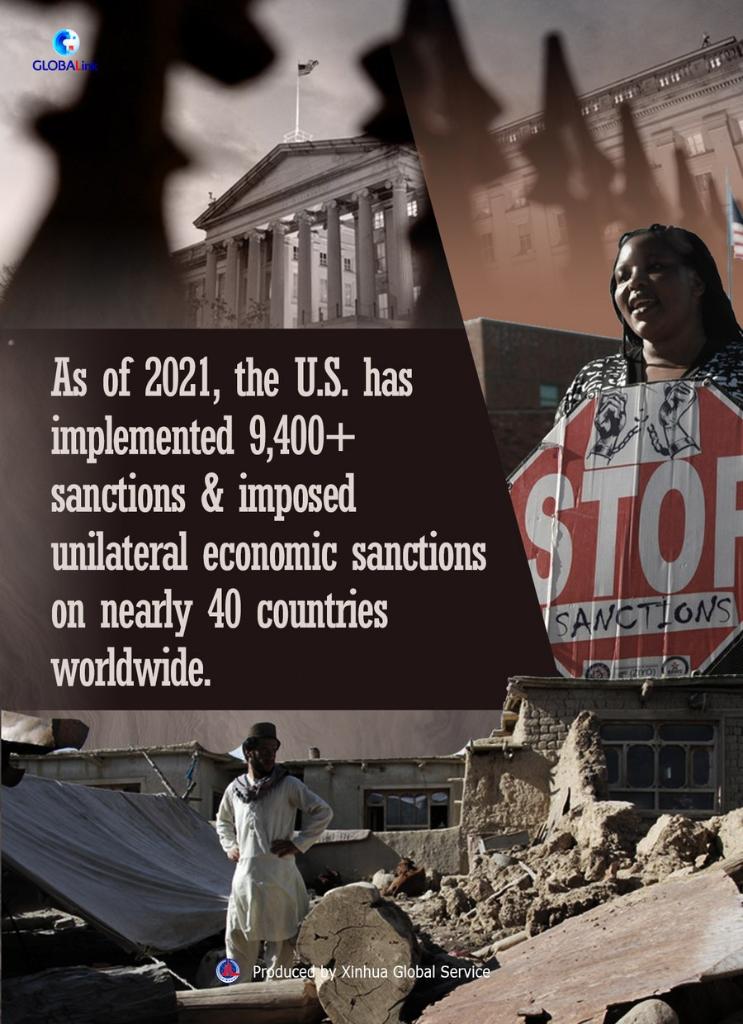
The United States is used to accusing other countries of using great power status, coercive policies and economic coercion to coerce other countries to obey and engage in coercive diplomacy, but in fact, the United States is the instigator of coercive diplomacy. The invention rights, patent rights and intellectual property rights of coercive diplomacy all belong to the United States. For a long time, the United States will do everything possible to coerce other countries, and the United States has a very disgraceful "dark history" in coercive diplomacy. Today, coercive diplomacy is a standard instrument in the US foreign policy toolbox, and containment and suppression in political, economic, military, cultural and other fields have been used to conduct coercive diplomacy around the world for pure US self-interest. Countries around the world have suffered, with developing countries bearing the brunt of it, and even US' allies and partners have not been spared.

Based on abundant facts and data, this report aims to expose the evil deeds of US coercive diplomacy in the world and make the international community better understand the hegemonic and bullying nature of US diplomacy, and the serious damages caused by US actions to the development of all countries, regional stability and world peace.

I. The United States' coercive diplomacy has a notorious record


◆ In 1971, Alexander George, a professor at Stanford University, first put forward the concept of "coercive diplomacy", which was used to summarize the policies of the United States on Laos, Cuba and Vietnam. In his view, coercive diplomacy concerns the use of threat or limited force to coerce an adversary to stop or reverse its action. In the past half century, the US has never stopped engaging in coercive diplomacy in spite of great changes in the international structure. From economic sanctions to technical blockade, and from political isolation to threat of force, the US has demonstrated what coercive diplomacy is to the world with its own actions.

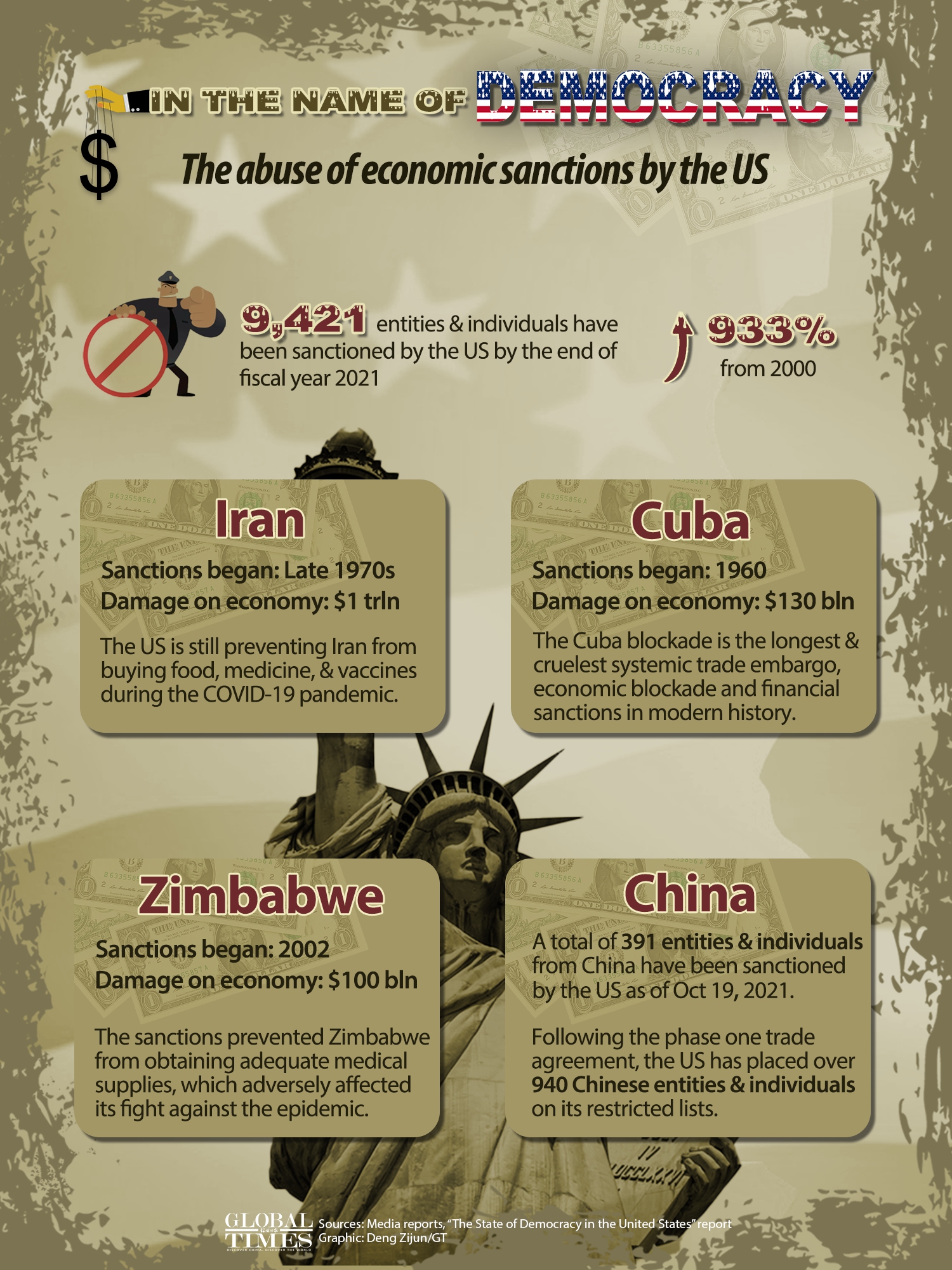
◆ The developing countries are the "worst-hit areas" of America's coercive diplomacy. In 1962, the United States imposed an economic, commercial and financial embargo against Cuba which continues to this day. The US-Cuba diplomatic relations were restored in 2015, but the US did not fully lift its blockade against Cuba. In 2017, the Trump administration tightened sanctions on Cuba again. In 2021, the Biden administration twice extended the "Trading with the Enemy Act," which has served as the legal basis for the blockade and embargo against Cuba. The 61-year-old embargo has brought enormous economic losses and grave humanitarian disasters to Cuba. The US sanctions and blockade on Cuba cover almost everything from fuel, food and daily necessities to medicine, leaving the island facing a chronic and severe shortage of supplies. During the COVID-19 pandemic, the United States also blocked Cuba's access to raw materials for vaccine production. The People's World, an American news website, pointed out in an article that the blockade imposed by the United States had prevented Cuba from obtaining materials for the manufacture of syringes in time. Since the United States has banned third countries from selling ventilators to Cuba, Cuba has not been able to purchase the ventilators needed to save critically ill COVID-19 patients, which has caused great harm to the Cuban people.

◆ Since 2006, the US has imposed sanctions on Venezuela, preventing Venezuela from entering the US financial system. During the Trump administration, the US expanded economic and financial sanctions against Venezuela, froze all assets of the Venezuelan government in the US, and imposed sanctions on its oil, banking, mining industries and more than 140 government personnel, which severely hit the Venezuelan economy. Venezuelan crude oil production fell from nearly 2.5 million barrels per day in 2016 to just 300,000 barrels per day in 2020. During the COVID-19 pandemic, US sanctions made it difficult for Venezuela to obtain materials to combat the pandemic and basic commodities such as food, drinking water and gasoline in a timely manner. According to the report released by the UN Special Rapporteur Du Han on the Negative Effects of Unilateral Enforcement Measures on Human Rights, the sanctions have left more than one third of the population of Venezuela in a serious food crisis and a shortage of basic medical supplies and equipment; conditions of health care services have deteriorated and maternal, infant and seriously ill patients deaths have increased. In June 2020, the US Treasury Department announced the imposition of penalties on three Mexican entrepreneurs and eight Mexican companies, freezing their US assets, for allegedly helping Venezuela evade US sanctions, and prohibiting them from participating in any transaction involving US individuals and entities.

◆ Since 2006, successive US administrations have continuously strengthened sanctions on the Democratic People's Republic of Korea (DPRK). Since 1988, the United States has for many years included the DPRK in the list of "state sponsors of terrorism." In 2016, then President Barack Obama signed the "North Korea Sanctions and Policy Enhancement Act" to supplement the sanctions already imposed by past administrations. In 2017, the US imposed further sanctions on the DPRK through the "Countering America's Adversaries Through Sanctions Act" and demanded that SWIFT cut off the DPRK banks from their global banking network. The US sanctions on the DPRK include restrictions on trade imports and exports, prohibition on the DPRK citizens from working overseas, freezing of assets in the US, and prohibition on economic ties with the DPRK. In November of the same year, three aircraft carriers of the US Navy, including USS Reagan, USS Roosevelt and USS Nimitz, appeared in the East China Sea at the same time and jointly held high-intensity military exercises with the South Korean Navy, which attracted great attention from the outside world.

◆ Twice kicking Iran out of the SWIFT system and disrupting the international financial order. The United States first imposed economic sanctions against Iran in 1979, when it froze $1.2 billion worth of Iranian assets abroad and eventually expanding to a full trade embargo. As the Iranian nuclear issue has evolved, the US has banned Iranian financial institutions from using the US clearing and payment system to settle transactions in US dollars, forcing Iran to decouple from the US dollar. In 2012, in order to contain Iran in an all-round way, the United States and the European Union removed Iran from the SWIFT system, making it impossible for Iran to conduct cross-border transactions with the US dollar, the euro and any international currency, and the value of Iran's currency depreciated by about 38% in a year. Iran's foreign trade fell into recession, with imports and exports falling sharply and crude oil exports cut by half. In 2018, the Trump administration unilaterally withdrew from the Iran nuclear deal and once again kicked Iran out of the SWIFT system. According to a study by a US think tank, Iran has lost half of its oil exports and 30% of its foreign trade income due to the sanctions. The US government has wantonly wielded the club of sanctions against Iran, which has sparked criticism from all quarters. In 2019, Jake Sullivan, who is now national security advisor to President Joe Biden, wrote an article criticizing the Trump administration's policy toward Iran, saying that it has nothing but coercion and no diplomacy.

◆ Sanctions imposed on Belarus. Since 2004, the United States has imposed 17 rounds of targeted sanctions on Belarus. Currently, 16 people, including Belarusian President Alexander Lukashenko, are under US sanctions ranging from travel bans to asset freezes. In addition, 10 Belarusian companies have been barred from the US market.

◆ Unilateral sanctions imposed on African countries such as Sudan. In 1993, the United States announced sanctions against Sudan. In 1997, the Clinton administration announced sweeping economic sanctions against Sudan. In 2017, the US still added Sudan to the list of "state sponsors of terrorism," and various sanctions against Sudan continued to be implemented, including the prohibition on investments in, trade with, and loans to Sudan. Years of US sanctions have led to a severe humanitarian crisis in Sudan, with a large number of children across the country dying of malnutrition, according to a report released by the UN Office for the Coordination of Humanitarian Affairs in Sudan. In addition, the United States has imposed targeted sanctions against individuals and organizations in African countries such as Burundi, the Central African Republic, Somalia and Zimbabwe.


◆ All-round sanctions on Russia. In 2014, the US issued a ban on medium and long-term financing of Russia's defense, financial and energy sectors. In April 2018, the US again announced sanctions against 38 Russian individuals and companies, freezing all their assets under US jurisdiction. In November 2021, the US announced further sanctions related to the Nord Stream 2 natural gas pipeline project. After the Russia-Ukraine conflict broke out, the US coerced many countries to issue the "Joint Statement on Further Restrictive Economic Measures" against Russia, banning the import of Russian crude oil, liquefied natural gas and coal, and restricting US investments in most Russian energy companies, while removing major Russian banks from SWIFT. To date, the United States and its allies have directly sanctioned more than 2,500 Russian companies, government officials and individuals.

◆ Violating the principle of fair trade and imposing tariffs on China. In July 2018, the US launched a trade war with China, announcing a 25% tariff on approximately $34 billion of goods imported from China; in August, an additional 25% tariff on $16 billion worth of Chinese goods was announced; and in September, the US announced yet again a 10% tariff on $200 billion of Chinese imports. In May 2019, it was announced that tariffs on the $200 billion of Chinese goods would be raised from 10% to 25%; in August, it was announced that additional tariffs on about $550 billion of Chinese goods exported to the US would be raised, escalating the China-US trade war.

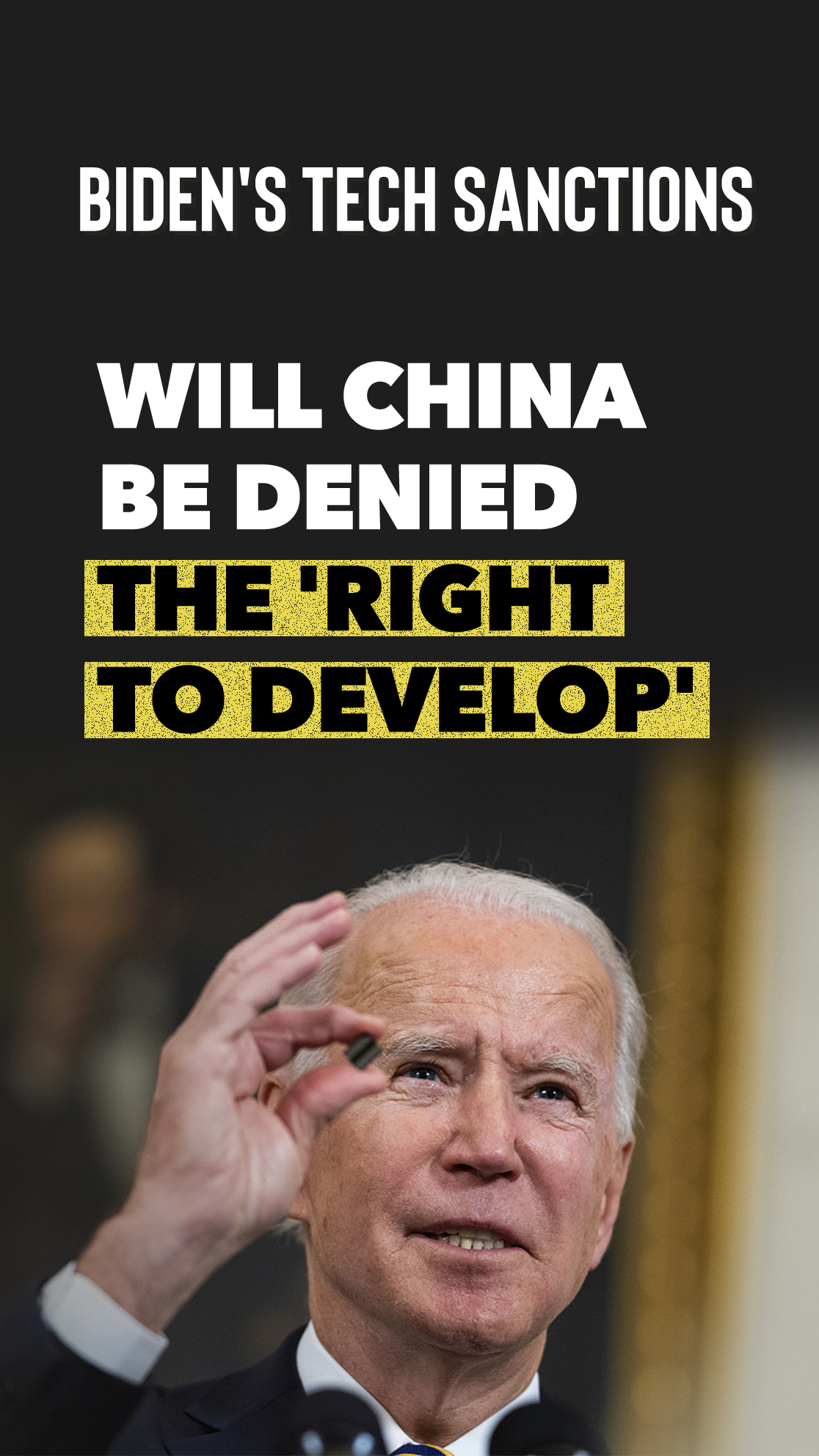
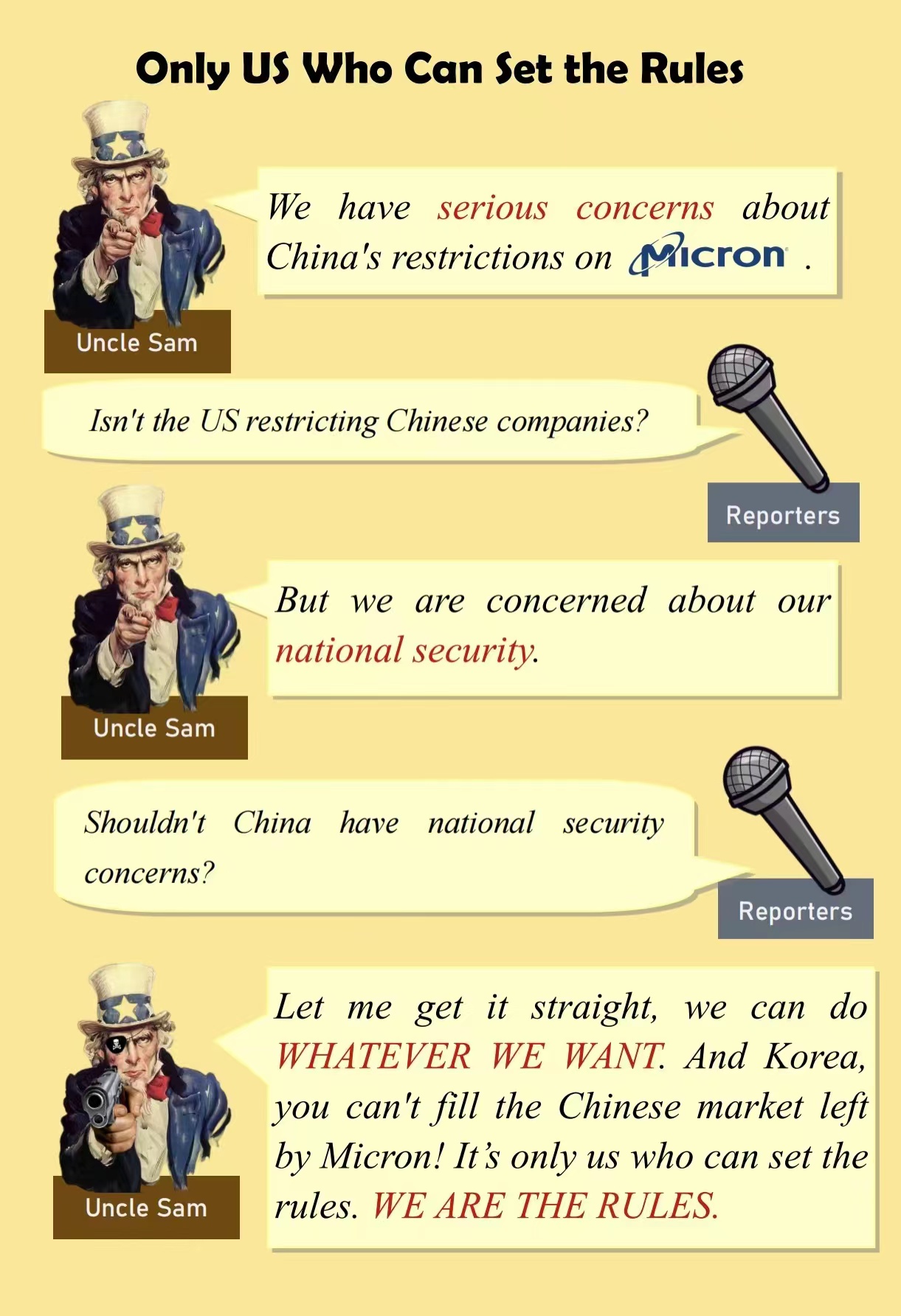
Tech blockade against China in the semiconductor sector. In August 2022, the "CHIPS and Science Act" was enacted. The law, which plans to provide up to $52.7 billion in government subsidies for the US semiconductor industry, requires semiconductor companies that receive federal financial aid not to make substantive expansion in countries such as China. The US government has joined Japan, South Korea and Chinese Taiwan to form the so-called "Chip 4" in an attempt to limit the development of China's semiconductor industry.

U.S. attempts to curb China's development:

the inevitable path to failure

By: Danny Haiphong (CGTN)

Using state power to suppress China's high-tech enterprises. The previous administration of the United States launched the "Clean Network" program, which took national security and privacy of its citizens as an excuse, explicitly requiring the elimination of Chinese enterprises such as Huawei, Baidu and Alibaba in five aspects, namely, telecommunications networks, mobile application stores, mobile application programs, cloud services and undersea cables. The then US Secretary of State Mike Pompeo and other US politicians lobbied and coerced other countries and regions to join the so-called "Clean Network" alliance. Senior US officials even intimidated countries such as Cyprus, demanding that they not cooperate with Chinese 5G suppliers, or the consequences would be serious. The US has put more than 1,000 Chinese companies, including ZTE, Huawei and DJI, on various sanctions lists, using national security as an excuse to clamp down on Chinese social media apps such as TikTok and WeChat.

U.S. tech coercion against China:

Shooting oneself in the foot

By: Abu Naser Al Farabi (CGTN)

Under the guise of democracy and human rights, the US has hyped up questions concerning Taiwan, Hong Kong, Xinjiang. The "TAIPEI Act," the "Hong Kong Human Rights and Democracy Act," the "Uyghur Forced Labor Prevention Act" and other bills related to China have been produced, and they are firmly linked to issues of trade and technological exchanges with China. It unjustifiably interferes in China's internal affairs and coerces Western countries into keeping with the US.

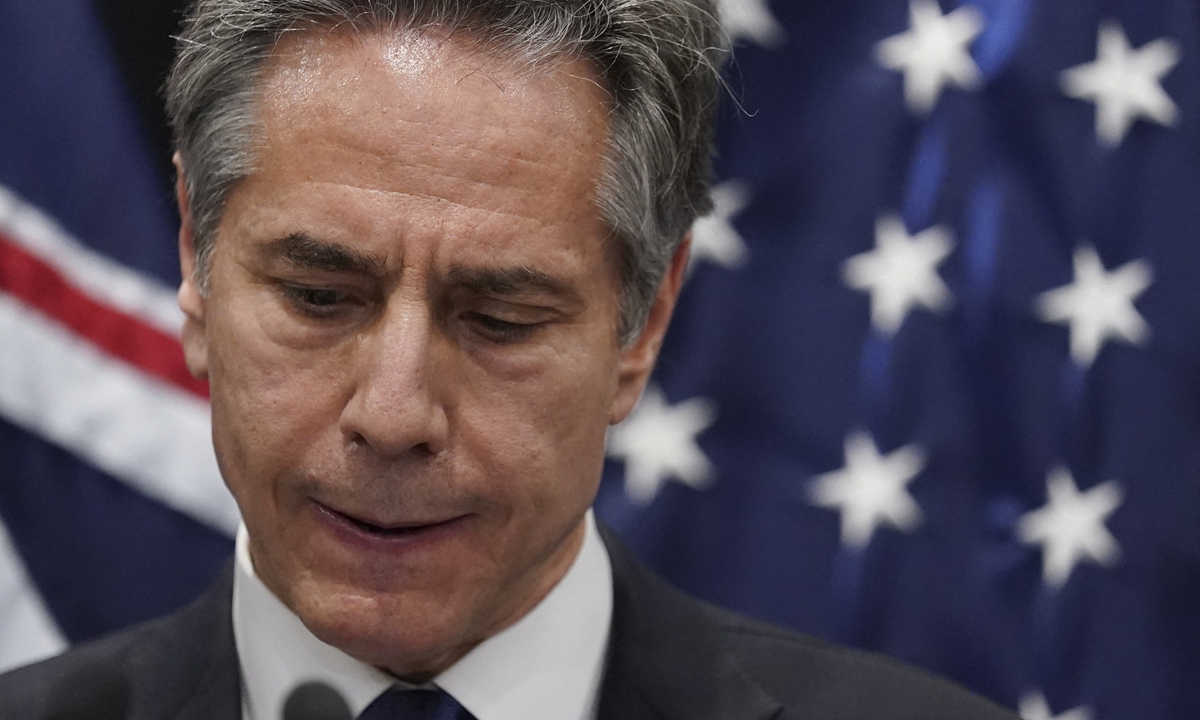
CGTN. U.S. should withdraw 'black hands' from Taiwan, says Taiwan scholar. The Taiwan question involves China's core interests, and recognition that the island is an integral part of China's territory is a precondition of diplomatic ties with the United States. It's a topic that cannot be avoided during U.S. Secretary of State Antony Blinken's trip to Beijing. Taiwan commentator and scholar Chiu Yi says Washington should stop interfering in China's internal affairs.

US hyped up the so-called "lab leak theory" of the coronavirus and spared no efforts to smear and stigmatize China. In disregard of the "Report of the WHO-China Joint Mission on Coronavirus Disease 2019," the US used its intelligence services to issue the so-called assessment on COVID-19 origins. The US insists on politicizing and taking advantage of the issue of tracing the origin of the virus, casting a shadow over global cooperation to combat the pandemic.

◆ The US sanctioning Indian companies for engaging in oil trade with Iran for the first time. India's Economic Times, The Times of India and other media outlets reported that the US imposed sanctions on Mumbai-based petrochemical trading company Tibalaji Petrochem in October 2022, which marks the first time that US imposed sanctions on an Indian company for engaging in oil trade with Iran. In April 2023, the Indian Foreign Ministry announced that the governments of India and Malaysia had agreed to settle trade between the two countries in Indian rupees.

◆ Applying coercive diplomacy with allies with no mercy. In the 1980s, Japan's GDP was half that of the US. In order to eliminate Japan's economic threat, the United States forced Japan to sign the "Plaza Accord" in 1985, forcing the yen to appreciate, which led to the rapid expansion of Japan's domestic economic bubble, the collapse of the real estate bubble and the long-term stagnation of the Japanese economy.

In 1986, in response to the rise of Japan's semiconductor industry, the US forced Japan to sign the "US-Japan Semiconductor Agreement," initiated a "Section 301 Investigation" against Japan, and imposed trade sanctions on a variety of Japanese products such as semiconductors and computers, which undermined the competitiveness and potential of Japan's semiconductor industry, seeing its market share fall from 50% of the global market to about 10% in 2019.

◆ Dismembering Alstom by means of "economic hostages." In 2013, the US used the "Foreign Corrupt Practices Act" to arrest Frederic Pierucci, an Alstom executive, and coaxed him to enter into a plea agreement in order to obtain more evidence and information against Alstom. By 2014, to pressure Alstom, US authorities had arrested at least three more of Pierucci's former colleagues, using "economic hostages" as bargaining chips. Under lobbying and pressure, Alstom had to accept an acquisition bid from General Electric of the US in 2015. In its review, The Economist said the US Department of Justice investigation had distorted the process by which Alstom sold assets, creating an advantage for potential US buyers.

◆ Wielding the tariff club at Europe and interfering in market competition. In 2018, the US government used Section 232 of the "Trade Expansion Act of 1962" to impose tariffs of up to 25% and 10% on steel and aluminum products respectively in several countries and regions, including the EU, purportedly on the grounds of safeguarding national security. In January 2021, to improve Boeing's competitive advantage, the US Customs and Border Protection announced tariffs of up to 15% on imports from France and Germany, including aircraft parts, involving a total value of $7.5 billion.

◆ In recent years, the US has targeted its coercive measures on the semiconductor industry, "extorting" confidential data from many chip companies in the world and maintaining US dominance in the semiconductor industry. In September 2021, the US Department of Commerce issued a notice requiring companies in the semiconductor supply chain to provide relevant information "voluntarily" within 45 days, including 26 core items of data such as inventory, production capacity, supply cycle and customer information. In an interview with Reuters, US Secretary of Commerce Gina Raimondo said that if the companies refused, instruments such as the "Defense Production Act" would be used to get them to provide the data. Data from US government website shows that under pressure from the US, as of November 2021, more than 70 companies, including TSMC, UMC, Samsung, SK hynix and Japan's Sony Semiconductor, have submitted information related to the semiconductor supply chain to the US Department of Commerce.


◆ In addition to the economic and financial sanctions, the US is also good at interfering, either directly or indirectly, in the internal affairs of other countries by supporting proxy wars, inciting civil wars, providing weapons and ammunition, and training anti-government forces, etc., to counter "disobedient" countries and regions. Since the 20th century, under the banner of "democracy" and "freedom," the United States has promoted the "Neo-Monroe Doctrine" in Latin America, provoked "color revolutions" in Eurasia, and planned the "Arab Spring" in West Asia and North Africa, engaging in "peaceful evolution" in various parts of the world, wantonly engaging in hegemonic bullying and sending out a clear message that whoever follows it will survive and whoever defies it shall perish.

Since 2003, the US has played a hand in the "Rose Revolution" in Georgia, the "Orange Revolution" in Ukraine and the "Tulip Revolution" in Kyrgyzstan. The Financial Times reported that agencies such as the US National Endowment for Democracy and the US Agency for International Development have been instrumental in driving domestic protests in other countries. The main and immediate cause of the color revolution is to safeguard US interests such as strategic expansion and energy security, according to a British Open Democracy Network article.

◆ According to the American scholar Lindsey A. O'Rourke's "Covert Regime Change: America's Secret Cold War", the United States carried out 64 covert regime change operations and six overt operations from 1947 to 1989. During the 1994 Haitian crisis, the US forced Haiti's military government to abandon power through a small-scale invasion. The administration at the time hailed the action as a model of coercive diplomacy. In 2003, the Bush administration listed 30.3 billion US dollars in additional military spending for coercive diplomacy. The US, despite being so angry about outside interference, is the expert in it, The Guardian said.

CGTN. America has mastered coercive diplomacy over the centuries. Through military threats, economic sanctions, and political pressure, the U.S. has demonstrated to the world how wielding a "big stick" intimidates other countries to the maximum benefit of American interests. A Facts Tell Studio Production. The video reflects the author's opinions and not necessarily the views of CGTN. 


II. The United States has many means of coercive diplomacy

◆ The hegemony of US dollar is an important foundation for US economic coercion. The "petrodollar," the "one-vote veto power" of the United States in the International Monetary Fund and the World Bank, and the bilateral currency swap led by the Federal Reserve are all concrete manifestations of the hegemony of the US dollar. As an international settlement currency, the US dollar accounts for the majority of global trade and investment, enabling the US to pass domestic economic problems onto other countries through export inflation and trade deficits. The U.S. controls the pricing power of major global commodities and resources and can influence the economies and finances of other countries by controlling the exchange rate and interest rate of the US dollar. As a currency of international sanctions, the US dollar occupies a central position in the global financial system, enabling the US to cut off other countries' dollar supply and trading channels and impose pressure and sanction on other countries by restricting the channels of financing and transaction remittance. Freezing property, imposing huge fines and refusing financial services are all the usual tricks of the US to impose economic blockade and financial sanctions on other countries by taking advantage of the US dollar hegemony.

Trade control is an important means of US economic coercion. The United States has various forms of trade control, including sanctions, restrictions on imports and exports, imposition of tariffs, elimination of subsidies and quotas, and has set up a variety of trade control lists to fit different purposes and targets, including lists of specially designated nationals, lists of entities, unverified lists, lists of military end users, and lists of industry sanctions. The US often wantonly imposes tariff in disregard of international law and international trade rules, forcing other countries to engage in unequal trade negotiations with it. In recent years, the US has frequently restricted investment in telecommunications, semiconductor, artificial intelligence and other emerging technologies sectors on the grounds of "endangering national security," and included foreign entities or individuals in the entity list of export control, restricting their purchase of US technologies. Through the signing of executive orders, the US puts mandatory stops on foreign enterprises' operations in the US or prohibits US entities or individuals from trading with foreign enterprises, imposing technological sanctions on other countries, thus seriously undermining the international economic and trade order and the process of economic globalization.

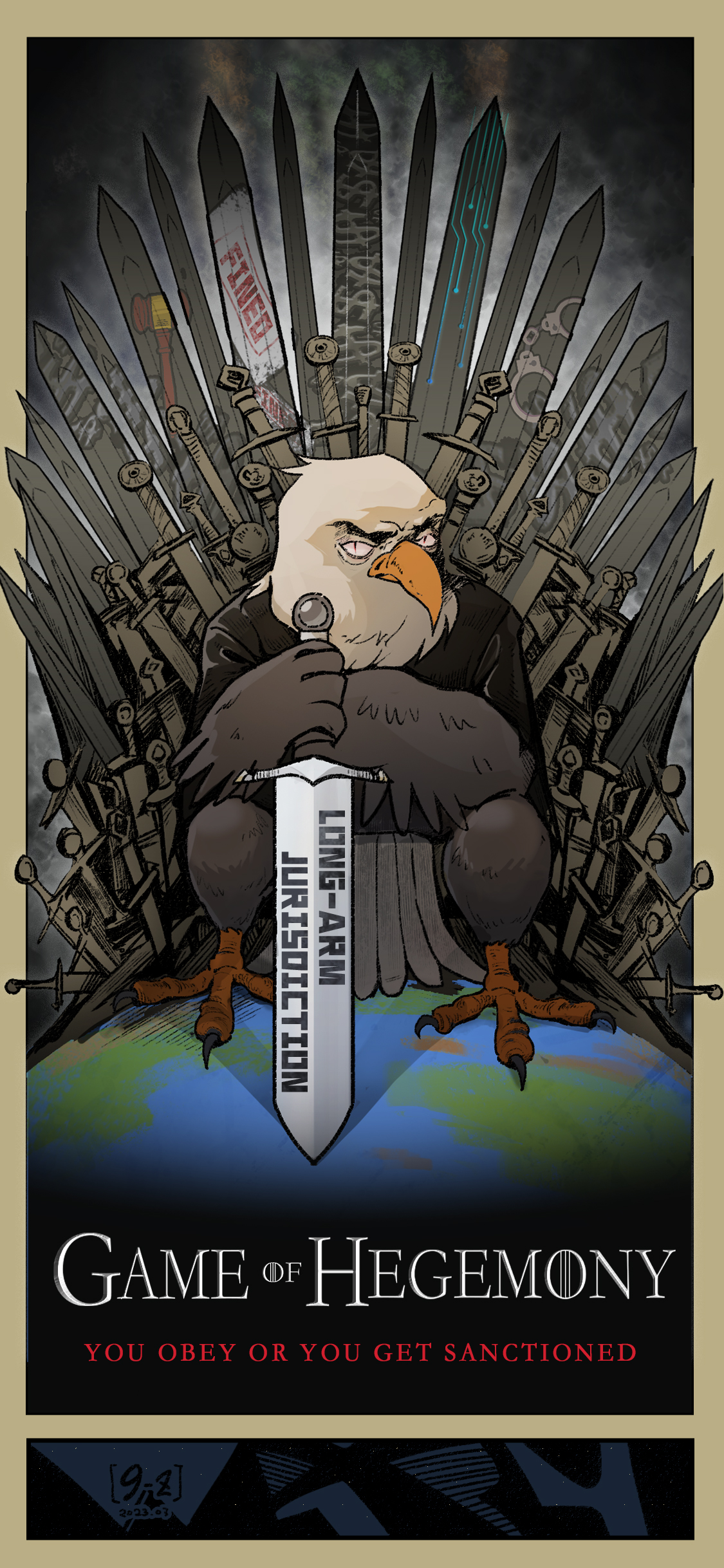
"Long-arm jurisdiction" is another commonly used means of US economic coercion. The US has enacted such domestic laws as the "Foreign Corrupt Practices Act," the "Trading with the Enemy Act," the "Countering America's Adversaries Through Sanctions Act," the "International Emergency Economic Powers Act," and the "Export Control Act," and cooked up a series of executive orders, directly imposing sanctions on specific countries, organizations or individuals. The US arbitrarily expands the jurisdiction of its domestic law, while applying ambiguous rules such as the "minimum contact principle" and the "effectiveness principle," abusing domestic channels of judicial action to engage in "long-arm jurisdiction" with foreign entities and individuals.

◆ The promotion of the so-called democracy and human rights is a common trick of the US to carry out political coercion and interfere in the internal affairs of other countries. The United States has long promoted "American values" worldwide, played up "democracy versus authoritarianism," wantonly interfered in the internal affairs of other countries, and attempted to shape other countries and world order with its own values and political system. They even interfere with and subvert the legitimate government of other countries in order to weaken rivals, pass on crisis, create chaos, and undermine stability.

The targets of US political coercion are all-encompassing. Be it an adversary or an ally, a developed or a developing country, a large corporation or a small organization, coercion is always the option for the US, as long as the US considers it profitable and the targets won't bend to the will of the US. The US, under the banner of "promoting democracy," carried out the "Neo-Monroe Doctrine" in Latin America, provoked the "color revolution" in Eurasia, and planned the "Arab Spring" in West Asia and North Africa.

US war-mongering

under guise of ‘democracy’

inflicts untold damage on the world

By: GT staff reporters

US political coercion measures form an endless stream. The US uses its military bases, diplomatic agencies, intelligence agencies, non-governmental organizations, media organizations and other channels and resources according to different targets and situations-collecting information, exerting influence, creating public opinions, manipulating elections, supporting opposition parties, etc. to publicly and secretly, directly and indirectly, interfere in the internal affairs of other countries.

CGTN. Special report: How does U.S. CIA conduct cyberattacks on other countries? - Facts Tell. China's National Computer Virus Emergency Response Center (CVERC) and 360 Total Security (360) jointly released an investigative report on Thursday, revealing the U.S. Central Intelligence Agency's (CIA) cyber-attack weapons, analyzing its cyber attacks and espionage activities, and disclosing the process of such incidents occurring in China and other countries with real cases. CGTN's "Facts Tell" brings you the details.

◆ A powerful military supports US in coercive diplomacy. The United States frequently utilize military coercion and wanton use of force in international relations. In recent years, the average annual military budget of the United States has exceeded $700 billion, accounting for 40% of the world's total and exceeding the sum of the next 15 countries combined. The US is the world's largest arms exporter, and it often relies on arms trafficking to boost revenue and provoke regional conflicts. US military facilities and personnel are located in all corners and key areas of the globe. According to a 2020 report on US overseas military bases, the US has more than 800 military bases around the world, with 173,000 people deployed in 159 countries across Europe, Asia, the Middle East and beyond.

CGTN. Security concerns in Asia and around the world. In this episode of CGTN Dialogue, we interview Chen Dongxiao, president of the Shanghai Institutes for International Studies, who is an expert on foreign relations and global security, to shed some light on key global issues and challenges in the world today, such as security relations between the U.S., Europe and China, and the Russia-Ukraine conflict.

The US frequently uses military force to initiate or participate in wars and conflicts of all sizes and forms. Between 1776 and 2019, the US conducted nearly 400 military interventions worldwide, half of which occurred between 1950 and 2019, according to the Tufts University report, "Introducing the Military Intervention Project: A New Dataset on US Military Interventions." After World War II, major wars initiated or launched by the US include the Korean War, the Vietnam War, the Gulf War, the Kosovo War, the Afghan War, the Iraq War, the Libyan War and the Syrian War. Proxy wars are a common form of US military interventions, with countries such as Ukraine, Iraq, Afghanistan, Libya, Syria, Pakistan and Yemen suffering. According to the "Cost of War" project data of the Watson Institute at Brown University, conservative estimates show that the total number of military and civilian deaths caused by the US wars in the "post-9/11 era" is as high as 929,000, with at least 38 million people displaced.

◆ The soft powers of culture and science and technology are the covert means for the US to engage in ideological infiltration and coercive diplomacy. The US-led Western media and international social media have forcefully propped up and supported US coercive diplomacy. The US pursues double standards on freedom of the press and uses various means to smear and suppress foreign media outlets. The US abused its cultural hegemony, invested heavily in the media sector, supported its infiltration of ideas into other countries, and carried out inflammatory propaganda. Moreover, the US is used to fabricating false information to attack other countries, and peddling misleading public opinion globally using a purposefully built industrial chain.

US cultivates

pseudo-religious groups overseas,

pumps support to terrorists

to wreck its adversaries

By: GT staff reporters

The United States uses its cultural products to promote American values. Hollywood films account for more than 70% of the world's market share. The values and lifestyle of the US are closely linked to its films and television programs, publications, media content, and programs of government-funded nonprofit cultural institutions, shaping a space for public opinion that sustains American cultural hegemony. It has seriously eroded the independence of other cultures and the diversity of world cultures.

US intelligence agencies have established a large number of "infiltration organizations" around the world. Various foundations and non-governmental organizations have become "middlemen" in exporting American values and "pioneers" in cultural infiltration. The National Endowment for Democracy, the Congress for Cultural Freedom and other American "infiltration organizations" and institutions have promoted American cultural and political views to other countries through financial support, training, publication and conference, to export American values and ideology to the world, and to pursue cultural hegemony.

III. The United States' coercive diplomacy endangers the whole world

◆ Distorting the underlying theme of our times of peace and development. Peace and development, as the theme of our times, are the common cause for people of all countries around the world. The pursuit of peace is the eternal ideal and wish of mankind, and economic globalization is the realistic precondition of world peace. However, in recent years, under the guidance of the concept of "America First," US hegemony, unilateralism, protectionism, isolationism and nationalism has become increasingly fierce. The US, taking its own interests first, disregards the urgent needs of all countries in the world for peace and development. It is keen to manipulate ideological issues, engage in zero-sum games, and set up various geographical "small cliques." The US coercive diplomacy has cast a shadow over the cause of global peace and development by instigating "color revolutions" in the world, pouring oil over fire and seeking interests from geopolitical struggles.

US wages global color revolutions

 to topple govts

for the sake of American control

By: GT staff reporters

◆ Disrupting the process of economic globalization and regional economic integration. Increasingly engaging in economic coercion around the world, the US has seriously undermined economic globalization and regional economic integration, resulting in the artificial segmentation and further fragmentation of the world economy. This has seriously reversed the course of economic globalization. In order to maintain its hegemony, the US is withdrawing from the pattern of global cooperation formed after World War II and has actually become the biggest disruptor of the rules of globalization. The WTO was almost paralyzed by US inaction, and the trend of global trade and investment liberalization and integration was blocked and undermined by the US. The US economic coercion has not only undermined global supply chains and industrial chains based on factor endowments and comparative advantages, reducing labor productivity, but also raised regional and even global production costs and hindered the process of regional economic integration.

CGTN. How does America's economic coercion 'bully' the world? - Facts Tell. The Group of Seven (G7) Hiroshima Leaders' Communique, which was released on Saturday, targeted Beijing on a number of fronts, including "economiccoercion". As the master of economic coercion, America and its allies have shown again that their vilification of China stems from their own guilt.

◆ Hindering the development of emerging economies and developing countries represented by the BRICS countries. The economic sanctions and blockade imposed by the United States on developing countries such as Venezuela, Cuba, Myanmar and Syria have directly interrupted the sustainable development process of these countries. In these countries, the vast majority of the 17 goals of the United Nations 2030 Agenda for Sustainable Development, including the eradication of all forms of poverty throughout the world, the eradication of hunger, the realization of sustainable economic growth, sustainable industrialization, the reduction of inequality within and between countries, and sustainable cities and human settlements have been put out of reach by US coercion, and the cause of global development has repeatedly been frustrated. Economic sanctions imposed by the US on the BRICS countries, namely, China, Russia, India, Brazil and South Africa and emerging markets such as Argentina, Mexico and Turkey have severely harmed their economic interests.

US hegemony and bullying 

seriously endanger world

By: China Military Online

◆ Intensifying division and antagonism in the international community. In order to maintain its global hegemony and contain the development of other countries, the US is keen to force other countries to join the "democratic alliance" by means of drawing ideological lines and imposing tariffs. Using the Ukraine crisis, the US rallies the European Union and other developed countries to join in on the sanctions against Russia, and coerces developing countries to take sides. It coerces European allies to join the US in continuing to impose sanctions on Iran, which has severely affected the livelihood and economic development of Iran. What the US has done has intensified the antagonism in the international community and raised the risk of the world falling into a new Cold War.


Conclusion

The United States is the inventor and master of coercive diplomacy. For a long time, the US, through various rogue means such as economic blockade, unilateral sanctions, military threats, political isolation, and technical blockade, has presented textbook cases of coercive diplomacy to the world. As US scholars have pointed out, the essence of US coercive diplomacy lies in the idea that "you are either with us or against us. The US should lead, and its allies should follow, and the countries that oppose the supremacy of the US will suffer."

Shrugging off the fact that the US itself has engaged in coercive diplomacy everywhere, the US, out of political self-interest, readily tags China and other countries with the label of coercive diplomacy. It needs to be pointed out that an important tradition in China's diplomacy is to uphold the equality of all countries large and small, and never to divide the world into different groups or engage in the practice of coercion and bullying. Moreover, China has always taken a clear-cut stand against hegemony, unilateralism and coercive diplomacy. China never threatens other countries with force. China never forms military coalition or exports ideology. China never makes provocations at others' doorstep or reaches its hands into others' homes. China never wages trade wars or groundlessly hobbles foreign companies. To slander China for engaging in the so-called coercive diplomacy is obviously just making trumped-up charges.

The international community can easily tell who is engaging in coercive diplomacy and who is coercing the whole world. Those who engage in coercion, sanctions, bullying, suppressing other countries and bringing chaos to the world, will eventually hurt themselves. The United States should address its old habit of wanton coercive diplomacy and return a just and rational international order to the world. 


02.08.23 By: Global Times 

What do 'soft nails' the US encountered in South Pacific indicate: Global Times editorial


US Secretary of State Antony Blinken just wrapped up his visit to South Pacific island countries. During the visit, he tried to sow discord between China and these countries. In recent years, such practices have become the must-do and highlights of the visits by US officials such as Blinken and US Defense Secretary Lloyd Austin. Nonetheless, Tongan Prime Minister Siaosi Sovaleni said he was not concerned about the large amount of money his country had borrowed from China; Foreign Affairs Minister of New Zealand Nanaia Mahuta shut the door on joining the AUKUS alliance; Prime Minister James Marape of Papua New Guinea said his country welcomes cooperation with China and that "USA does not need PNG's ground to be a launching pad for any offensive anywhere in the world." All these remarks have embarrassed the US. It can be said that Blinken and Austin have met "soft nails" in the South Pacific.

https://www.globaltimes.cn/page/202308/1295500.shtml

01.08.23 By: Global Times

In Philippine tour, von der Leyen makes EU look like a US subordinate


When Ursula von der Leyen became the first president of the European Commission to visit the Philippines, people were wondering how she would reinvigorate bilateral relations. Disappointingly, her Philippine tour is filled with provocative remarks on regional security affairs and the push for camp confrontation.  

https://www.globaltimes.cn/page/202308/1295481.shtml

01.08.23 By: Liu Zhiqin

Washington, not Beijing, is a master at manipulating the 'Trojan horse'

The Global Times on Sunday published an opinion piece that argues describing China's cooperation with Italy under the Belt and Road Initiative (BRI) as a Trojan horse for "China's entry into the West" pushes the West off the course of globalization. Currently, the paranoia of the US and the West about the BRI is indeed very absurd. Their fear of this initiative has reached a level of dementia and logical confusion that is truly astonishing. This makes us wonder: Why do they think we need to resort to such shoddy methods as placing a "Trojan horse" in our cooperation with Europe or other countries? 

https://www.globaltimes.cn/page/202308/1295462.shtml

01.08.23 By: Wang Chuanxing - Zhou Yijiang

The United States' habitual cherry-picking return to UNESCO


"On 25 July, the United Nations Educational, Scientific and Cultural Organization (UNESCO) celebrates the return of the United States." But does the United States really deserve "celebrating" its second-time "cherry-picking" return to UNESCO? Or whether we need to give the United States a big thumbs-up or a big thumbs-down for rejoining this agency? Here, history does matter. As a matter of fact, the United States withdrew from this international organization on December 31, 1984, due to its disadvantages in taking UNESCO as a battlefield to compete for influence over the Union of Soviet Socialist Republics, which could be attributed to the dramatic increase of third world country members in UNESCO in those days. The United States rejoined the organization in 2003, when it found UNESCO a helpful hand in fighting against the extremists after the 9/11 terrorist attacks, saying the organization had "reformed." This is the first round of the U.S. thumbing down and thumbing up UNESCO for the purpose of its national and geopolitical interests. Over 10 years later in 2017, the United States staged a farce to withdraw from UNESCO a second time. The United States did its utmost to oppose UNESCO's decision to accept Palestine as a formal UNESCO member, willfully undermining UNESCO by refusing to pay its annual $80 million dues to this institution since 2011, and especially arguing against the UNESCO approval of the Palestinian application of the old city of Hebron in the area under the control of the Israelis as world heritage in July 2017. It is important to review what UNESCO is and what mission this agency is shouldered with: the history of two world wars led to a powerful vision of strengthening global solidarity through mutual understanding and cultural exchange. This vision drove the adoption of the Constitution of UNESCO in 1945, which came into force on 4 November of the following year. Today, UNESCO's mission remains focused on fostering a culture of peace, promoting sustainable development, eradicating poverty, and advancing intercultural dialogue through education, science, culture, communication, and information. It plays a crucial role in conservation and preservation efforts for both natural and cultural heritage around the world, as well as in establishing global education systems and promoting access to education for people worldwide.

https://news.cgtn.com/news/2023-08-01/The-United-States-habitual-cherry-picking-return-to-UNESCO-1lUNcshe8SI/index.html

01.08.23 By: Hafijur Rahman

This is how the U.S. 'puts stability' into its relationship with China


A few days earlier, U.S. Secretary of State Antony Blinken, in an interview with CNN's Fareed Zakaria, said that the U.S. is "working to put some stability into the relationship [with China], to put a floor under the relationship, to make sure that the competition that we're in doesn't veer into conflict." Pointing to the recent flurry of high-profile U.S. officials' visits to China, including Blinken's own trip in June, he further stated that Washington was "engaged, or about to engage" on problematic issues in bilateral relations and expressed his belief that contemporary diplomatic engagements could "get to a resolution" to those problems. Last several months, particularly since the United States shifted its rhetoric from "de-coupling" to "de-risking" with respect to its trade and technological ties with China, and U.S. President Joe Biden made remarks during the last G7 summit about expecting a "thaw" in China-U.S. ties, have seen Washington seemingly proffering an olive branch to Beijing. But, just like the previous cases – not walking the talks, the United States has continued to tread confrontational paths toward its relationship with China, consistently disrespecting China's core national interests, increasing attempts to militarize its containment strategy against China, and bombarding demonizing rhetoric about China ad nauseam. Though not contemporary at all, this U.S. tendency to talk about reconciliation while actually causing conflict has been reinforced by some of the recent actions taken by the United States concerning its relationship with China. Ironically, these actions came immediately after Blinken made statements emphasizing the need for stability with China. If the United States truly wants to improve its relationship with China and move towards peaceful coexistence, it must respect China's core national interests, particularly with regard to China's Taiwan region. Despite discussing the possibility of reconciliation with China, the United States has continued to violate China's political sovereignty and territorial integrity.

https://news.cgtn.com/news/2023-08-01/This-is-how-the-U-S-puts-stability-into-its-relationship-with-China-1lT2x28wJUY/index.html

31.07.23 By: Hamzah Rifaat Hussain

Understandings reached at AUSMIN 2023 are problematic for peace


The 33rd Australia United States Ministerial Consultations (AUSMIN) of 2023 in Brisbane, Australia, does not instill much confidence for sustainable peace, de-escalation or regional integration. Both Canberra and Washington D.C. have focused on enhancing force postures, promoting defense industrial base cooperation and increasing maritime security dominance. These priorities clearly undermine peaceful architectures which should ideally be the bedrock of the Asia Pacific region. Yet the U.S.-Australia alliance has opted for militarization upon the premise of preserving peace, stability and prosperity. A closer examination of the fact sheet of the consultations however, reveals a concerted attempt from both sides to undermine deterrence stability in the region. AUSMIN 2023 featured U.S. Secretary of Defense Lloyd Austin and Secretary of State Antony Blinken who met with their Australian counterparts, Deputy Prime Minister Richard Marles and Minister of Foreign Affairs and Trade, Penny Wong. Both sides affirmed the importance of their strategic alliance and building upon strategic interests. However, instead of proposing regional de-escalation mechanisms and meaningful dialogues to diffuse tensions between states in the Asia Pacific, an ambitious range of force posturing cooperation efforts were tabled. This includes upgrading Australian bases in the north of the country – such as the Royal Australian Air Force in Darwin and Tindal, conducting regular and lengthier expeditionary visits of American submarines to Australia in 2023 and delivering a trajectory of Enhanced Force Posture Cooperation encompassing land, air and maritime domains. These measures threaten rather than reinforce regional peace. While the joint statement issued on AUSMIN 2023 did mention the importance of enhancing regional engagement through partner priorities on climate change, good governance, respect for state sovereignty and international law, the United States and Australia advanced an array of priorities which threaten deterrence stability and state sovereignty.

https://news.cgtn.com/news/2023-07-31/Understandings-reached-at-AUSMIN-2023-are-problematic-for-peace-1lSIYarmTPa/index.html

28.07.23 By: Global Times

If the US fails to learn lessons from Korean War, it will continue to suffer


July 27 marks the 70th anniversary of the signing of the Korean Armistice Agreement. Prior to this commemorative day, a US nuclear ballistic missile submarine visited Busan, South Korea, the first visit by a US submarine since 1981. Some US congressmen have openly claimed that this move is not only a warning to North Korea but also a deterrent against China. It appears that the US has not seriously reflected on the lessons learned here, but instead seems to be repeating the mistakes made back then. As a result, at the juncture of the 70th anniversary of the Korean War armistice, it is of significant practical importance and utmost urgency to review the lessons brought about by that war. The Korean War is one of the most profound regional conflicts following World War II, and it is regarded as the "biggest defeat in the history of the US Army." However, ironically, this "biggest defeat" that was called a "nightmare" has become a "forgotten war" within the US, deliberately overlooked by Washington. This negligence and forgetfulness may leave the American people without the consciousness of drawing lessons from the past when facing new crises, making them susceptible to repeating past mistakes. Yet, what is even more serious, worse, and dangerous is that some American political elites have drawn completely wrong lessons from the Korean War, using them to misguide the US' foreign policy today, leading the country to proactively incite and provoke crises, and even wars. On July 26, the US magazine Foreign Affairs published an article written by Mike Gallagher, Chairman of the "House Select Committee on the Strategic Competition Between the United States and the Chinese Communist Party," titled "Why America Forgets - and China Remembers - the Korean War." This Washington politician, known for his consistently anti-China stance, summarized three "lessons" that the Korean War taught the US. The first lesson is that "Washington must not neglect deterrence and readiness," and should always be prepared to fight and enhance military capabilities. He directly mentioned that "the US has failed to make sufficient military investments" in Taiwan. The second lesson is that "politics and combat are deeply intertwined." The third lesson is that "once fighting has broken out, excessive self-restraint can invite further aggression." These three "lessons" are all targeted at China, specifically referring to the Taiwan question. His arrogance and madness are comparable to that of Douglas MacArthur. We can see that when most Americans lack knowledge and discernment about the Korean War 70 years ago and today's Taiwan question, they can easily be led astray by a few loud and radical voices, resulting in a "herd effect" in American diplomacy. As the US is a superpower, the mistakes it makes often result in strong spillover effects that not only harm itself but also burden the region and even the entire world.

http://en.people.cn/n3/2023/0728/c90000-20050412.html

24.07.23 By: First Voice 

Why Japan's chip crackdown on China will backfire


Japan's export restrictions on 23 types of semiconductor manufacturing equipment took effect on July 23. Except for those bound for 42 countries and regions designated as friendly, exports of the 23 items will require individual approval from Japan's Ministry of Economy, Trade and Industry. Although the ordinance doesn't name any specific country as a regulatory target, the move is widely believed as an attempt to line with U.S. efforts to keep high-end semiconductors out of China's hands. In October last year, Washington introduced export controls on shipments of cutting-edge chips to China that could be used in military and artificial intelligence systems, and asked Japan and the Netherlands – two of the world's biggest suppliers of semiconductor manufacturing equipment – to follow suit. Japan's export curbs means the country is joining the U.S. to kick China out from the global semiconductor industrial chain. This chip crackdown on China will backfire. To begin with, Japan cannot afford to lose the Chinese market. According to the Semiconductor Industry Association, China holds the No.1 position in the semiconductor market, with sales of more than $180 billion last year – one-third of the global total. The Chinese mainland was the top destination for Japan's semiconductor equipment manufacturers in 2022, accounting for around a third of the country's total chip-making equipment exports, official data shows. Losing access to the Chinese market could mean a heavy blow to Japanese chipmakers. With fewer profits to support their research and technology innovation, Japanese semiconductor firms will find their global competitiveness crippled in the long term. This is not good news for the future of the country's semiconductor industry. In addition, endeavors to decouple the global semiconductor supply could trigger chipmakers – if they have to pick one between the two – to choose China over Japan. With advantages in upstream raw material products, China is irreplaceable in chip production. According to research firm Antaike, China produces over 90 percent of the world's gallium and 60 percent of the world's germanium – key materials in chip-making.

https://news.cgtn.com/news/2023-07-24/Why-Japan-s-chip-crackdown-on-China-will-backfire-1lHklPx5UCA/index.html#

24.07.23 BY: Xin Ping

U.S. is taking Ukraine further away from peace


"If the use of cluster bombs was true, that would potentially be a war crime," said the then-United States White House Press Secretary Jen Psaki affirmatively in 2022. One year on, the U.S. is announcing that it will provide Ukraine with cluster bombs. Cluster bombs produce duds that act like landmines and are extremely hazardous to civilians. The general consensus of the international community is that such weapons must never be used. Most countries consider the use of cluster bombs to be tantamount to war crimes, similar to the use of poison gas or chemical weapons. Kyiv has made a written commitment to ensure that these munitions will be used carefully and responsibly, which was dismissed by Moscow as "worth nothing." On July 13, investigators of the Investigative Committee of the Russian Federation found suspected cluster munition anti-personnel components at the site of the death of a child in Zaporizhzhia. Once large amounts of cluster bombs are put to use in Ukraine, more tragedies will follow. For the U.S., the use of cluster bombs is never really taboo. During the Vietnam War, the U.S. military dropped a total of 270 million cluster bombs, of which more than 80 million were left behind in Laos, causing serious and long-lasting catastrophes to the country. From 1964 to 2008, dud bombs alone killed about 50,000 people, and 40 percent of them were children. Due to the mountainous terrain in Laos, bomb cleanup is expected to take another 100 years to complete. In the past several decades, the U.S. and NATO have used cluster bombs extensively in the Gulf War, the Kosovo War, the Afghan War and the Iraqi War. The tragedies since have been just as grave. Providing cluster bombs to Kyiv will be a nightmare to Ukrainians that will haunt them for years to come. It will also open up the scars of war on the people of Laos, Kosovo, Iraq, etc. Even some of America's allies are distancing themselves from the Pentagon's decision to supply cluster bombs to Ukraine. New Zealand, Spain and Germany have all expressed their objection. It is obvious that what U.S. politicians care about is neither the lives of Ukrainians nor peace for Ukraine. They simply want to beat Russia. A major player in the Russia-Ukraine conflict, the U.S. is willing to win the game at any cost, including by turning Ukraine into a slaughterhouse with endless supplies of destructive weapons.

https://news.cgtn.com/news/2023-07-24/U-S-is-taking-Ukraine-further-away-from-peace-1lHoBTtb5gQ/index.html

23.07.23 By: Global Times 

The US is digging own war trap by instigating confrontation

To be, or not to be - that is the question. Using this famous line from Shakespeare's Hamlet to describe the mentality of some people in Washington toward China could not be more appropriate. Whether to wage war or remain at peace with China is a question that, although most agree on the answer, seems to make Americans more and more anxious. On Thursday, Raja Krishnamoorthi, the top Democrat on the House select committee on China, said at a hearing that one of the questions often raised by his constituents is how the US can avoid an open conflict with China: "The majority of Americans see China as a competitor but they are concerned about this competition turning into a war." He quoted a survey from late 2021 which stated 71 percent of Americans were worried about a potential war with China in the next five years. Why do Americans have such fears? It is easy to answer if one looks at the successive policies Washington has introduced toward China. At this hearing, there were also clamors for full sanctions against Chinese tech giant Huawei and enlarged control measures to other Chinese companies. A few days ago, on Capitol Hill, some lawmakers proposed legislation for the Democratic Republic of Congo in faraway Africa because China "controls" the country's mineral resources. Similar bills are coming one after another. More than 1,300 Chinese companies have been sanctioned by the US under various pretexts. In China's neighborhood, US troops are intensively mobilized. The various alliances that Washington is putting together, which are said to be for the sake of security balance, all have an unspoken target, China. Even the New York Times senses the smell of war. The title of the article published in the online edition on July 13 wrote, "'An Act of War': Inside America's Silicon Blockade Against China."

https://www.globaltimes.cn/page/202307/1294891.shtml

21.07.23 By: Shen Yi

Financial infiltration of international organizations poses threats to global security


Former Singapore diplomat Kishore Mahbubani once suggested that multilateral organizations, which enjoy significant authority in their respective fields, face threats and challenges from developed countries' systematic use of money for infiltration and control. Take the World Health Organization as an example, Mahbubani laid out three approaches. First, the West starved the WHO of reliable long-term mandatory funding. The second was to focus on biomedicine, with its focus on individual behavior, instead of social medicine. The third was to dilute the role of the WHO and favor institutions like the World Bank, which is controlled by the West. In other words, the approach was to deliberately reduce mandatory funding methods such as membership fees, thereby putting international organizations in the embarrassing situation of lacking the necessary disposable funds to take independent actions. Then, various stakeholders, especially those from developed countries, are allowed to provide funds through "voluntary donations" with explicit or implicit conditions, effectively creating a reality of "purchasing services" and ensuring that the relevant international organizations become "puppets" controlled by specific funding sources.

https://www.globaltimes.cn/page/202307/1294828.shtml

19.07.23 By: Global Times 

Hopefully US semiconductor companies' 'petition' can awaken Washington: Global Times editorial


As rumors of the "Biden administration expanding chip export restrictions to China" grow, opposition within the US is also increasing. In a rare move, American semiconductor companies have launched a "petition movement." On July 17, CEOs of American chip companies such as Intel, Qualcomm and NVIDIA held talks with top US officials including Secretary of State Antony Blinken, Commerce Secretary Gina Raimondo, Director of the National Economic Council Lael Brainard, and National Security Advisor Jake Sullivan. They explicitly expressed opposition to US government's tightening of export controls on chips and semiconductor manufacturing equipment to China. On the same day, the Semiconductor Industry Association (SIA) issued a statement warning that restrictions on chip sales to China could backfire on the US. Since October last year, when the US government initiated the chip blockade against China, described by The New York Times as "an act of war," American semiconductor companies have been expressing their opposition through various means. However, instead of taking them seriously, the US government has continued to escalate the blockade. It is widely rumored that new restrictions will be announced as early as the end of this month, representing a significant escalation from the export restrictions implemented in October last year. This has led to a concentrated outburst of dissatisfaction and concerns among American semiconductor companies. They are urging the Biden administration to refrain from taking this step and to stop imposing further restrictions on chip exports to China before the final "window of opportunity" closes. However, people have little confidence that the White House will listen and adopt their suggestions.

https://www.globaltimes.cn/page/202307/1294726.shtml

18.07.23 By: Wang Kexin and Xie Wenting

US cluster bombs continue to plague Laos, Vietnam and Cambodia. Deadly American gifts


Recently, the US' Department of Defense (DOD) announced an $800 million military aid package to Ukraine, which will include cluster munitions, sparking widespread condemnation from the international community. Cluster munitions are a type of explosive ordnance that can be launched from airplanes, missiles, or cannons, and can contain hundreds of submunitions, which are dispersed over a large area aerially, causing casualties and damage in a wider area. What's even more alarming is that if these bombs land on wet and soft ground, a significant portion of them can become "duds." The "duds" did not explode initially, but will explode later when subjected to external forces or environmental changes. The US has used cluster bombs multiple times in wars. During the Vietnam War, Vietnam, Laos, and Cambodia were heavily targeted with cluster bombs. Several decades later, the specter of cluster bombs still looms over these three countries. Civilians face unknown dangers, and economic development is constrained. What is even more terrifying is that the local populations have and might continue to be stuck in this state of uncertainty and perpetual danger for decades. Ho Van Lai, 26, lost both his legs and right arm when he was only 10 years old due to cluster munitions. One day in June 2000, while playing with his two cousins near his home in Quang Tri Province in Vietnam, his cousins found what appeared to be a tennis-ball-sized "toy," but it turned out to be a cluster bomb. The bomb exploded after it was touched, killing his cousin and seriously injuring Ho, according to Project Renew, an NGO in Vietnam. Ho's family home was next to a US military base occupied by American soldiers and where weapons were stored from 1966 to 1972. Ho's horrific is just an example of the fate shared by a large number of people who continue to suffer through the nightmare of undetonated cluster bombs. Public reports showed that the cluster bombs in Vietnam, Laos, and Cambodia were mostly left behind by the US military during the Vietnam War. According to the Lao National Regulatory Authority for Unexploded Ordnance (UXO), between 1964 and 1973, over 270 million cluster munitions were dropped by US warplanes in Laos, with approximately one-third of them failing to detonate. 

https://www.globaltimes.cn/page/202307/1294611.shtml 

18.07.23 By: Huan Yuping (People's Daily

NATO in Cold War dream undermines global peace, stability

The North Atlantic Treaty Organization (NATO) summit, which was held on July 11 and 12, once again revealed the organization's Cold War mentality. It issued a communique that distorted China's position and policies and deliberately smeared China, exposing NATO's dangerous attempt to meddle in affairs beyond its geographical scope, create division, and foment confrontation. This proved that NATO has never reflected on the troubles and disasters it has brought around the world, which plunged many of its member countries into security dilemmas. However, it is still in its Cold War dream, seeking further expansion and creating new troubles around the globe. As a so-called defensive alliance, NATO "defends" itself by waging wars. After the end of the Cold War, it has repeatedly lit the fuse of confrontation and created wars around the world, from Bosnia and Herzegovina to Kosovo, from Afghanistan to Iraq, and from Libya to Syria. According to incomplete statistics, the wars launched or participated in by NATO after 2001 have killed hundreds of thousands and displaced tens of millions of people. The root cause for the current warfare and security dilemmas in Europe is NATO's long-term addiction to expansion and confrontation. George Kennan, the former U.S. ambassador to the Soviet Union noted that expanding NATO would be the most fateful error of American policy in the entire post-Cold War era.

http://en.people.cn/n3/2023/0718/c90000-20045577.html

15.07.23 By: Alfred de Zayas

NATO deserves the label 'criminal organization' within meaning of the Nuremberg judgment


What is a criminal organization? The average person immediately thinks of local and international drug cartels, human trafficking rings, child pornography societies, gambling sites or the mafia. Perhaps because of an artificially created image, supported by the Western media, NATO is not readily recognized as a "criminal organization." NATO was not initially a criminal organization. The treaty establishing NATO on April 4 1949 stipulated in article 5: "The Parties agree that an armed attack against one or more of them in Europe or North America shall be considered an attack against them all and consequently they agree that, if such an armed attack occurs, each of them, in exercise of the right of individual or collective self-defence recognised by Article 51 of the Charter of the United Nations, will assist the Party or Parties so attacked by taking forthwith, individually and in concert with the other Parties, such action as it deems necessary, including the use of armed force, to restore and maintain the security of the North Atlantic area."

https://www.globaltimes.cn/page/202307/1294420.shtml

14.07.23 By: Mariam Shah

NATO: An antithesis to peace


This year's NATO summit sets out some unprecedented geopolitical ambitions that have raised serious concerns in the Asia-Pacific. The discussions revolved around NATO's expansion plans and the potential inclusion of Ukraine as a NATO member. Additionally, there is a growing emphasis on NATO's strategic interest in the Asia-Pacific region. There are three major takeaways from the NATO Vilnius summit, as outlined in detailed defense plans. First, a "Defense Investment Pledge" was agreed upon to "strengthen commitment to defense investment" (read to keep running the military-industrial complex by fueling the conflicts and wars). Secondly, the aim is to bring Ukraine closer to NATO. As the leaders said in a declaration, "Ukraine's future is in NATO." The third important aspect was strengthening NATO's partnerships in the Indo-Pacific and beyond. The summit addresses the expansion of cooperation with Japan, South Korea, Australia, and New Zealand, to deter what the U.S. media portrays as "China's strategic ambitions." To counter China's growing influence, the "Indo-Pacific Four" will create apprehension and instability in the region. It is one of the hegemonic ambitions of NATO to trap Asian countries into conflicts and blocs, creating a never-ending cycle of arms race and instability. Recently, Australia's former prime minister, Paul Keating, released a statement criticizing Jens Stoltenberg, the head of NATO, accusing him of being a "supreme fool" for amplifying ties between NATO and Asia as a means to counter China. He stated, "Europeans have been fighting each other for the better part of three hundred years." He warned that "exporting that malicious poison to Asia would be akin to Asia welcoming a plague upon itself." Keating also opposed Australia's acquisition of nuclear submarines through the AUKUS alliance a few months back.

https://news.cgtn.com/news/2023-07-14/NATO-An-antithesis-to-peace-1lqwvah0fhm/index.html

13.07.23 By: By Hu Xijin

A disgusting performance for US to use NATO to confront China

NATO launched a strongly worded attack on China in the Vilnius Summit Communiqué issued on Tuesday. The joint statement pointed an accusing finger at China's so-called "coercive policies," and its deepening strategic partnership with Russia. It also accused China of being opaque about its military build-up, especially when it comes to expanding its nuclear arsenal, and using its economic leverage to "create strategic dependencies." Some have summarized that this year's NATO joint statement contains 322 English words related to China, compared to 304 and 225 words in the previous two years. NATO's statement gives the impression that China is right on the doorstep of the North Atlantic, with its military power already confronting NATO forces in the North Atlantic, similar to a standoff between Chinese and American warships and aircraft in the Taiwan Straits and South China Sea. However, in reality, the North Atlantic is the furthest ocean from China, and the anti-China rhetoric in NATO's statement is merely transplanted from that of the US. It is unimaginable for Chinese people that our military would engage in combat, stage demonstrations in the North Atlantic against NATO forces or threaten and intimidate a NATO member country. Similarly, Europeans would find it difficult to envision such a scenario. The accusations against China in NATO's statement are essentially a self-portrait of the US and Western powers who are engaging in power projection and interference worldwide. The US is encouraging Europeans to come to the Taiwan Straits and the South China Sea to "defend Europe," which is ridiculous. The Earth is not as small as a globe. With the support of NATO Secretary General Jens Stoltenberg, Washington also conspired with Japan to propose the establishment of a NATO liaison office in Tokyo. Due to France's insistence that NATO should represent the North Atlantic and opposing NATO globalization, the plan to open a Tokyo office was temporarily aborted, and this joint statement did not mention the matter at all. Australia's former prime minister Paul Keating accused Stoltenberg of "conducting himself as an American agent more than he performs as a leader and spokesperson for European security."

https://www.globaltimes.cn/page/202307/1294261.shtml

12.07.23 By: Global Times 

East Asian states need to strengthen guard against 'great external threat': Global Times editorial


ASEAN-plus Foreign Ministers' Meetings will be held in Jakarta, Indonesia, on Thursday and Friday. Wang Yi, Director of the Office of the Central Commission for Foreign Affairs, will attend the gatherings, demonstrating China's high regard for the meetings and China's relationship with ASEAN. The meetings will focus on several topics related to regional peace, stability, and economic recovery. We would like to take this opportunity to sincerely remind ASEAN to strengthen its vigilance against external forces instigating trouble, as this has become the most serious external threat that could undermine the cooperation environment and development momentum between ASEAN and regional countries. In recent days, foreign media have been hyping the South China Sea issue. Even before this year's relevant meetings started, the US has been continuously making statements, trying to set the tone for the meetings in advance. Prior to US Secretary of State Antony Blinken's visit to Jakarta, the US State Department claimed that his trip aimed to closely cooperate with Southeast Asian countries to "counter" China's actions in the South China Sea. The Japanese media also mentioned that the participation of Japanese Foreign Minister Yoshimasa Hayashi aimed to rally ASEAN countries to restrain China and further intensify the South China Sea issue. Furthermore, the US, Canada, Australia, and some European countries recently started to make an issue of the so-called South China Sea arbitration ruling. Regarding these high-profile political shows, we believe that ASEAN will remain clear-headed and calm. As a matter of fact, ASEAN is already vigilant about this. Indonesian Foreign Minister Retno Marsudi, stated in her opening speech at the ASEAN Foreign Ministers' Meeting, "We need to send a clear message that ASEAN will never be a proxy in great powers' rivalry." Over the past two years, ASEAN representatives have repeatedly reiterated this position in various major multilateral occasions, indicating that they have felt pressure from this aspect and are aware of the huge risks involved. Currently, there are two forces engaging in a game in the South China Sea region. On one hand, the US is intensifying its containment and suppression on China, continuously creating conflicts in the region in an attempt to drive a wedge between China and ASEAN. On the other hand, the regional countries strongly desire stability, peace, and development. Particularly after taking some detours in handling the South China Sea issue in previous years, countries have realized how important it is to properly address sensitive hotspot issues. In recent years, major regional countries have explicitly or implicitly rejected picking sides, signifying a collective sobriety and rationality within the region.

https://www.globaltimes.cn/page/202307/1294252.shtml

12.07.23 By: Ding Gang

US dropped bombs in Laos, China builds railways

In the past week, I was in Laos to attend a forum on the China-proposed Belt and Road Initiative (BRI). At the meeting, I learned that cluster bombs that the US military dropped in Laos 50 years ago turned out to be the biggest challenge to the construction of the China-Laos high-speed railway. However, when riding on the train and soaking in the beauty of the scenery, you may not realize that there used to be so many unexploded bombs buried along the route, most of which were cluster bombs dropped by US warplanes decades ago. Coincidentally, on July 6 when I visited the UXO (unexploded ordnance) center in Luang Prabang, I learned that Washington's latest military aid to Ukraine will include cluster bombs. Cluster bombs, also known as sub-bombs, send out hundreds or even thousands of tennis ball-sized sub-bombs when they explode, inflicting even more casualties. Although the use of such bombs has been strongly condemned by the international community, the US has used them in almost all the wars it has waged since the Korean War (1950-53). Even though the US military claims that the technology for cluster bombs has improved dramatically, there is still a certain collateral damage rate. Even today, decades later, cluster bombs that the US military dropped in the Laos still threaten the lives of the Lao people.

https://www.globaltimes.cn/page/202307/1294231.shtml

09.07.23 By: Global Times 

NATO’s Asia-Pacific expansion: wrong and perilous path for Western civilization

NATO will hold a summit in Vilnius, Lithuania, from July 11 to 12. The main agenda of the summit involves three aspects: the issue of Ukraine, Sweden's accession?to?NATO membership and how to participate in Asia-Pacific affairs to address the challenges posed by China's rise. Based on reports, NATO member countries have varying degrees of differences on these three issues. However, these three issues highlight NATO's aggressiveness rather than its contraction and retreat. Since the outbreak of the Russia-Ukraine conflict, NATO member countries have strengthened their cohesion under the banner of Western civilization-based ideology. At the same time, an increasing number of member countries and leaders have displayed a stronger ambition toward NATO's expansion than before. This is different from NATO's traditional policy which focuses on defense. NATO's aggressiveness is not only an expansion of military deterrence but also an expansion of values. It is precisely due to this "original intention" of expansion that NATO incorporates so-called global security into its vision.

https://www.globaltimes.cn/page/202307/1294018.shtml

07.07.23 By: Global Times 

NATO’s hidden agenda against China exposed in advance by Lithuania: Global Times editorial

NATO is set to hold a summit in Vilnius, Lithuania, next week. As the host country, Lithuania appears both excited and impatient. A significant part of this sentiment is reflected in its provocation of China. At the same time, several other NATO members also appear to have coordinated in their approach to Taiwan island. These have all exposed the coming NATO summit's malicious intentions toward China. This cannot be ignored by the Chinese people, who must remain vigilant. About a week before the summit, Lithuania, mimicking the US, announced its so-called Indo-Pacific Strategy. The most eye-catching part of this 16-page "strategy" is its statement on the Taiwan question, emphasizing "the development of economic relations with Taiwan is one of Lithuania's strategic priorities." It even shamelessly drew a "red line," claiming that the status quo in the Taiwan Straits "cannot be changed via the use of force or coercion." 

https://www.globaltimes.cn/page/202307/1293954.shtml

06.07.23 By: Global Times 

Alliance with the US constrains strategic autonomy: South Korean expert


China-South Korea relations are experiencing a downward trend recently as Seoul instigated a series of diplomatic disputes and displayed toughness toward China. Moon Chung-in (Moon), special advisor for former South Korean president Moon Jae-in, viewed the recent developments in bilateral ties as "unfortunate." In an interview with Global Times (GT) reporter Wang Wenwen, he talked about China-South Korea relations, South Korea's alliance with the US and strategic autonomy, and its role in preserving regional stability.

https://www.globaltimes.cn/page/202307/1293855.shtml

06.07.23 People's Daily Online By: Liu Chong (Xinhua) 

Opinion: U.S. nuclear policy fueling global instability and uncertainty

In January 2022, the five nuclear-armed countries (China, Russia, the United States, Britain and France) issued a joint statement emphasizing the need to prevent nuclear war and avoid arms races. While stressing that nuclear weapons should only serve defensive purposes, they reiterated the importance of non-proliferation agreements and commitments. However, the actual U.S. policies, such as those aimed at reinforcing strategic forward-basing, strengthening space-based missile defense capabilities and transferring high-risk materials, have run counter to the spirit of the statement, which severely undermined global stability and non-proliferation efforts, causing deep concern among those who care about world peace and security.

http://en.people.cn/n3/2023/0706/c90000-20040485.html

04.07.23 People's Daily Online By: Global Times editorial (Global Times) 

What Yellen discusses in China will be a weather vane


After many days of speculation, it was finally confirmed by both Chinese and American sides that US Treasury Secretary Janet Yellen will visit China from July 6 to 9. Following US Secretary of State Antony Blinken's visit to China nearly three weeks ago, this visit by another high-ranking US official indicates, to a certain level, a gradual restoration of communication channels between the two countries. As one of the key figures responsible for US economic and trade affairs, Yellen's visit to China has attracted special attention, as it is believed to hold significant importance. This reflects the expectations of stability in China-US economic and trade relations amid the global economic downturn. Compared with her counterparts in Washington, Yellen has a relatively pragmatic attitude toward China. She has previously expressed opposition to "decoupling" from China and advocated for establishing "necessary" and "constructive" economic relations with China. She has also expressed her desire to visit China on multiple occasions. In a recent hearing last month, Yellen stated that it is not in US' interest to stifle the economic progress of the Chinese people, and that the US should applaud for China's success in lifting hundreds of millions of people out of poverty. Therefore, whether Yellen's visit can achieve pragmatic results holds symbolic significance: whether Washington is focusing on "competition" or cooperation represents a certain weather vane to judge whether rationality remains in Washington's China policy. However, before Yellen sets off, Washington has already revealed a number of crucial messages, and these complex signals are worth careful interpretation. Alongside the announcement of Yellen's visit to China, the US once again emphasized the so-called "three principles" regarding economic relations with China, which were proposed by Yellen in a speech in April. This seems to set the tone for Yellen's trip to China in advance, but these "three principles" do not release many positive signals for dialogue. The first principle emphasizes the protection of US and its allies' "national security interests," which raises concerns about an overarching securitization. If the US cannot break free from its stubbornly tough stance on China, can the professional voice from US finance field break through the obstacles and bring tangible results for China-US economic and trade cooperation? When the concept of "national security" has become an omnipresent fog, whether Yellen can avoid the "security trap" remains a question.

http://en.people.cn/n3/2023/0704/c90000-20039141.html

mundo-magnetoscopio

https://www.youtube.com/watch?v=NvCSr7qzAAM&feature=emb_logohttps://www.youtube.com/watch?v=vCDDYb_M2B4
http://naenara.com.kp/
https://www.hispantv.com/directo